
Last updated November 24, 2026
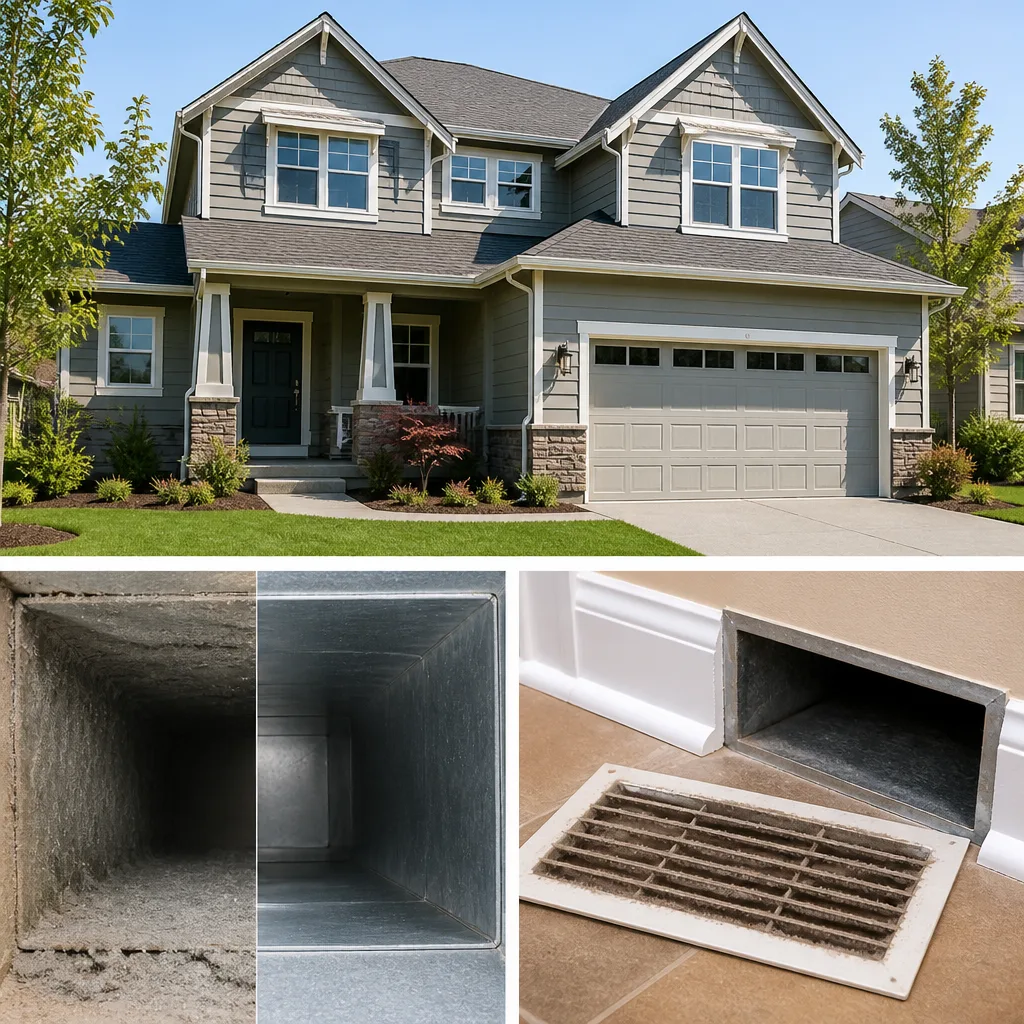 Whole-home duct cleaning
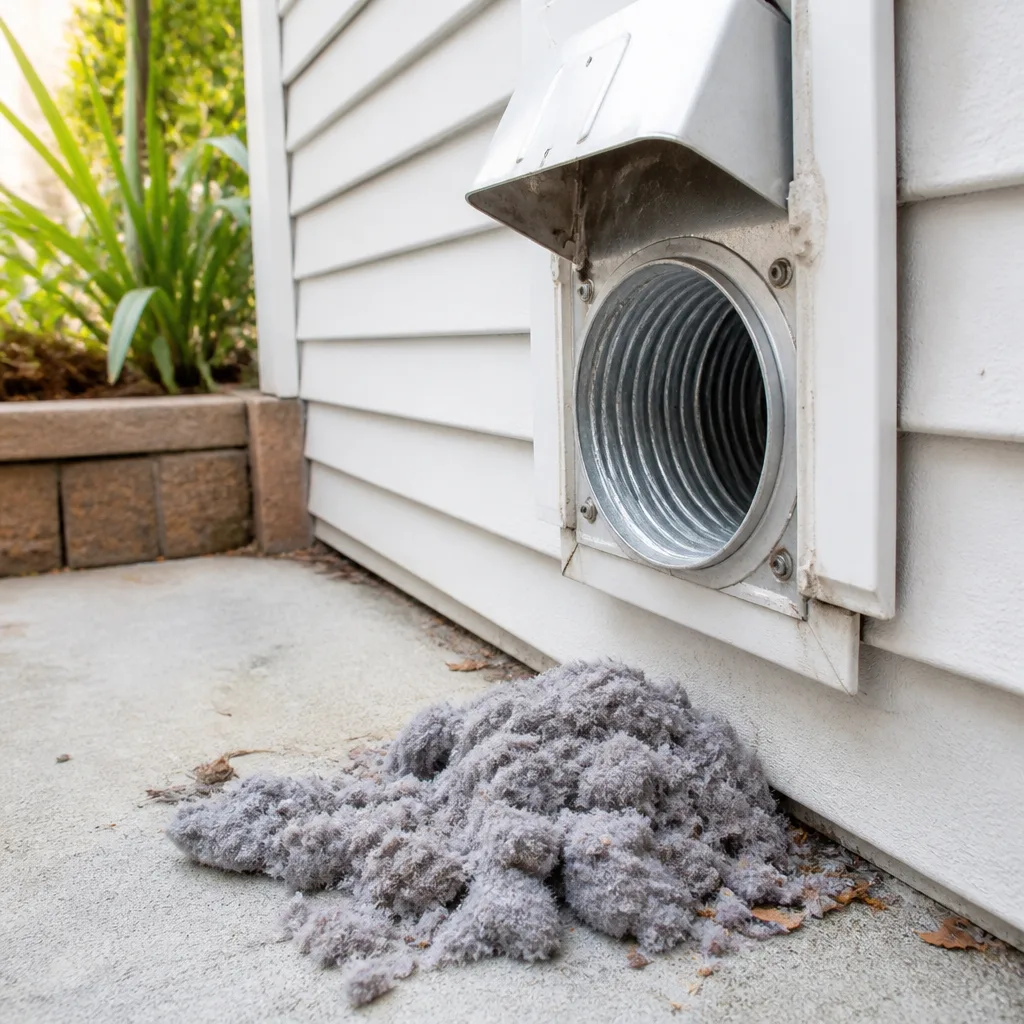 Dryer vent cleaning
 Camera inspection
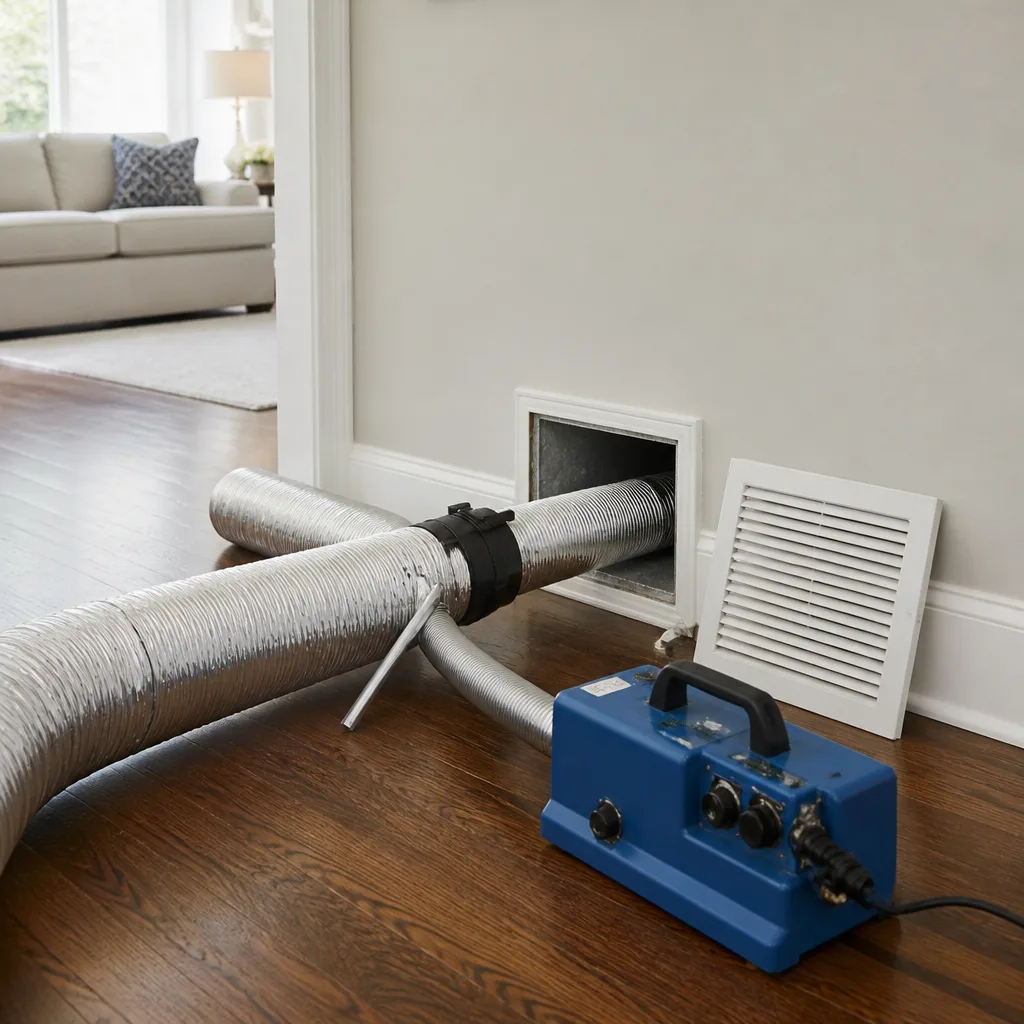 Sanitizing & deodorizing
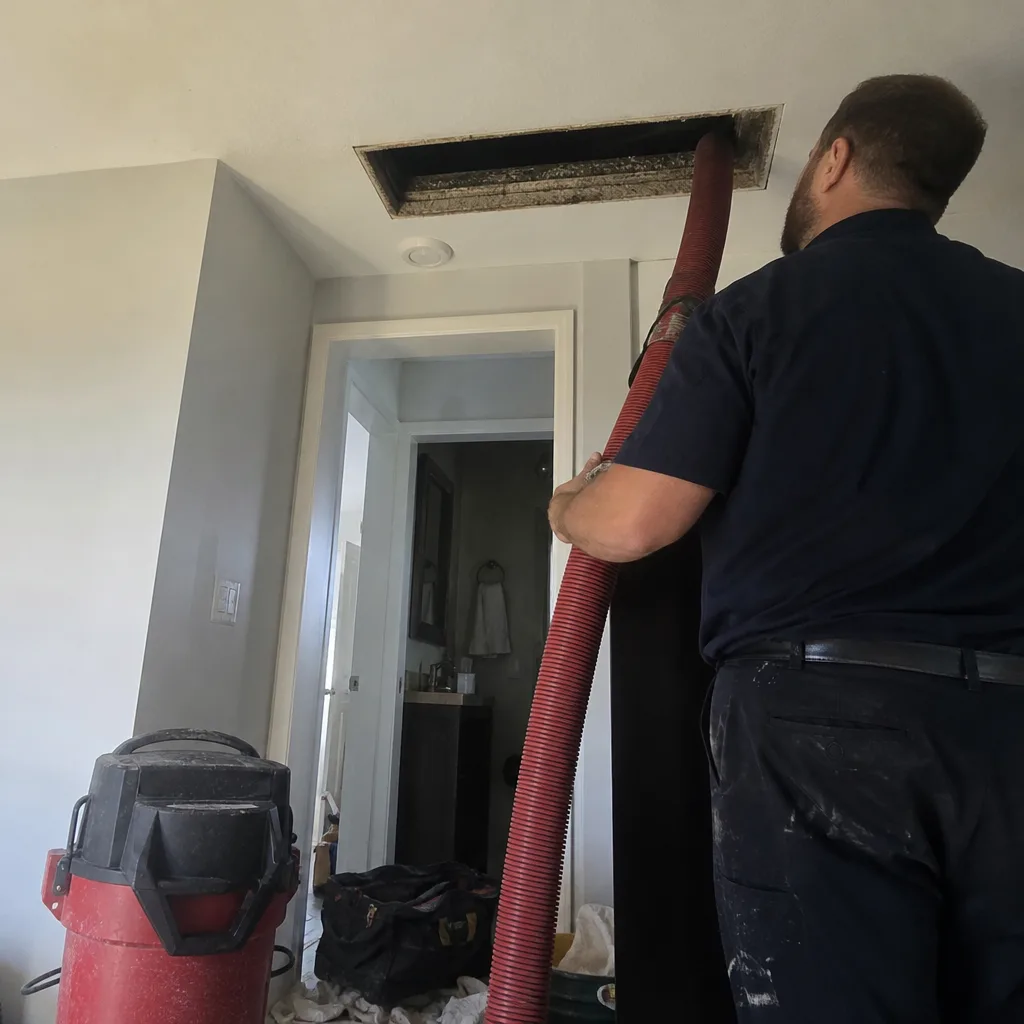
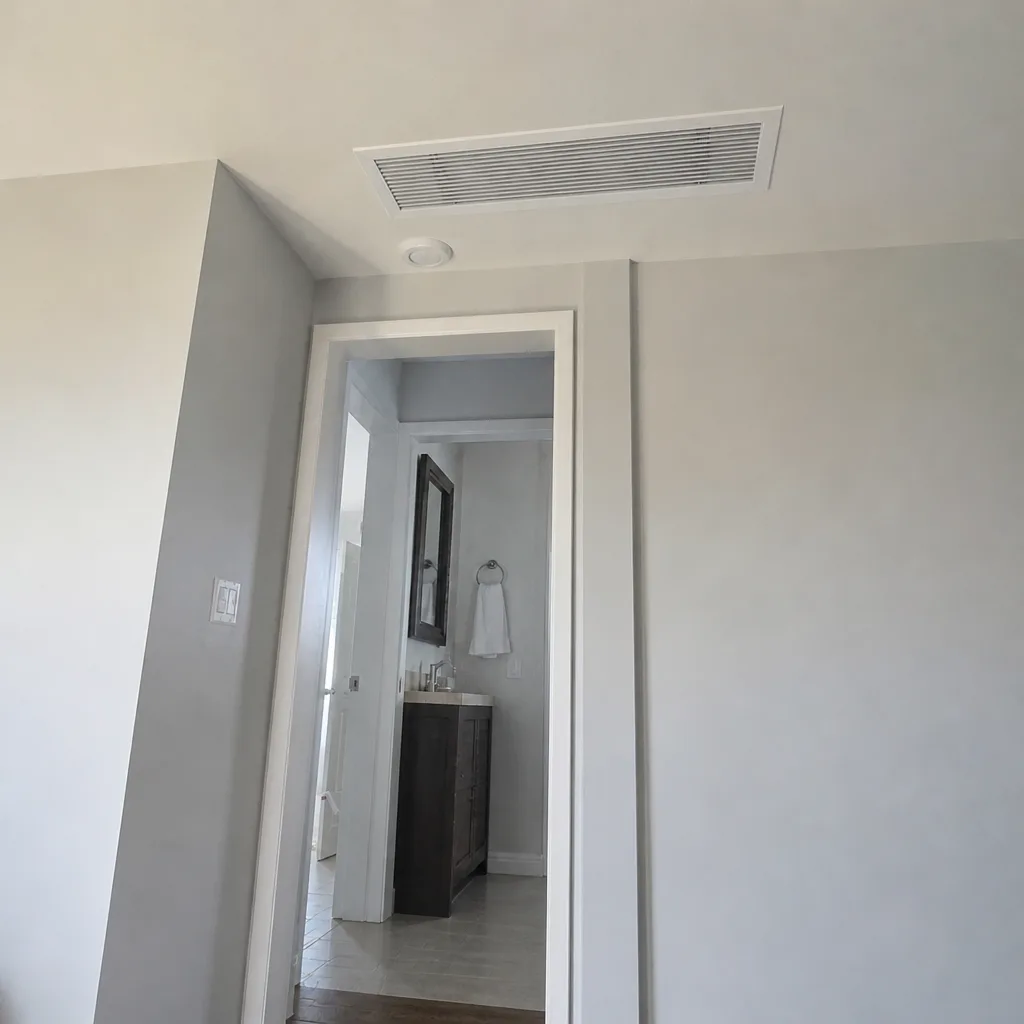
Whole-system duct and dryer vent check with before-and-after photos - you see exactly what came out of your vents
That "$99 whole-house special" is a bait ad - the real number appears once they are in your hallway, or the "clean" is a shop-vac at the register. We photograph the inside of your ducts before and after instead.
Seasonal Air Duct Cleaning Care for Five Points: Year-Round Homeowner’s Guide
The best time to address duct humidity problems in a Five Points home isn’t when you smell mildew in August. It’s in April, before the season’s first extended cooling run seals moisture into the system. Most homeowners treat duct care as a one-time chore, something to schedule when dust gets bad enough to notice. But a duct system in this part of North Carolina faces a different set of stressors every few months, and each one leaves its own residue behind. This guide walks through those seasonal patterns in detail and gives you a month-by-month plan so you’re cleaning for what’s actually happening inside the system, not just reacting to what you can see on the register.
Quick Answer
In Five Points, duct care works best on a seasonal rhythm: a deep cleaning in early spring before cooling season, filter changes that match the pollen and humidity load, and a second inspection in fall before the heating cycle starts. Humidity, pollen, and heating residue stress the system differently across the year, so a plan that treats every month the same misses the biggest problems. Scheduling professional work just before a mode switch, not after, gets you the most out of each cleaning.
Styles & brands we work with
- Whole-home duct cleaning
- Dryer vent cleaning
- Camera inspection
- Sanitizing & deodorizing
Table of Contents
- Why Five Points Ductwork Ages Differently
- Spring: Pollen Loading and the Cooling Switch-Over
- Summer: Humidity, Condensation, and Sealed-In Moisture
- Fall: Debris Infiltration and the Heating Switch-Over
- Winter: Heating Residue and Coil Bake-On
- What Mode Switches Do to Your Duct Connections
- Month-by-Month Action Plan
- When to Schedule Professional Cleaning
Why Five Points Ductwork Ages Differently
Five Points sits in a climate that shifts hard between seasons, and that shift is what does the damage. Summer brings stretches of high humidity that load the system with moisture. Fall brings pollen and fine outdoor debris that find their way into return air. Winter runs long heating cycles that cycle airborne dust over hot coil surfaces. Each of these is a separate problem, and each one lands on a different part of the airflow pathway.
The homes here add a wrinkle too. Many Five Points houses have older duct layouts, some with runs that were added or rerouted over the years. Those transitions and joints are where the system is most vulnerable to seasonal pressure changes. When the system switches from heating to cooling, the ducts go through a thermal and pressure swing that can work a loose connection looser. We’ve seen this pattern on plenty of neighborhood inspections: a duct that holds fine in one season starts leaking in the next.
Here’s the point worth holding onto. You can’t judge duct condition from the register grille alone. What’s inside the walls determines how the system performs, and that interior environment changes with the calendar. A year-round care plan that tracks those seasonal stressors will always beat a single cleaning done whenever you happen to remember it.
Spring: Pollen Loading and the Cooling Switch-Over
Spring is the highest-load season for return-air contamination in Five Points. Pollen counts climb as trees and grasses release, and every time the system runs, it pulls outdoor air and fine particulate into the return side. That material doesn’t just sit on the filter. It coats the return plenum, the blower housing, and the duct walls behind the filter, which is exactly where homeowners never look.
The filter you run in spring matters more than in any other season. A higher MERV rating captures more pollen, but it also restricts airflow, and an undersized system will strain against a filter that’s too dense. The right move is usually a mid-range pleated filter changed more often, not the densest filter on the shelf swapped once a quarter. If pollen season leaves you changing filters every three or four weeks instead of every three months, that’s a signal the return system is overloaded, not a sign you bought a bad filter.
Here’s a numbered way to handle the spring transition:
- Change the filter to a fresh pleated filter before the first cooling run, and note the date on the edge.
- Walk the return grilles and note any that feel weak or whistle, a sign of a gap or restriction upstream.
- Check the outdoor condenser for leaf and pollen debris before the cooling season starts, because a dirty coil pushes more heat and dust back into the system.
- Book a professional inspection before the cooling switch, not after, so any looseness or buildup gets addressed while the system is still in heating mode.
The April timing in our opening hook is the key idea. Moisture problems compound once the cooling season seals a damp system into a cold, closed loop. Catching the return-side buildup in spring, before the first long cooling run, keeps that moisture load from ever getting started.
Summer: Humidity, Condensation, and Sealed-In Moisture
Summer is when Five Points ductwork faces its moisture stress test. Air conditioning removes humidity as it cools, and that moisture has to go somewhere. When it condenses on cold duct surfaces or in the air handler’s drain pan, it creates a damp environment inside the system. If duct runs pass through unconditioned space, like an attic or crawlspace here in Five Points, those runs stay cold on the outside while the humid air around them stays warm, and condensation forms on the duct jacket.
That’s where musty odors come from. A system that smells damp in July usually has moisture sitting somewhere it shouldn’t: a wet insulation blanket, a clogged condensate line, or duct interior that never fully dried after the last season. Cleaning alone won’t fix it if the moisture source remains. This is where duct repair and sealing as part of the same visit matters, because a disconnected or poorly sealed run in humid space is a moisture trap that keeps coming back.
What to track through the summer months:
- Humidity target: keep indoor relative humidity in the 40 to 55 percent range. Below 40 feels dry, above 55 invites mold growth in the duct interior and on the coil.
- Condensate line: check that it drains freely. A slow line backs up and wets the air handler cabinet.
- Filter cadence: a mid-range pleated filter every three to four weeks during peak cooling keeps the coil from icing and the airflow steady.
- Odor check: a persistent musty smell at a register points to moisture, not just dust, and needs an inspection rather than another filter.
If your air handler lives in a hot, humid attic, the moisture load is higher than a system tucked into a conditioned closet. That’s a Five Points reality in many older homes, and it’s why summer is the season when sealing and repair do the most good.
Fall: Debris Infiltration and the Heating Switch-Over
Fall is the season homeowners underestimate. The cooling season ends, the heating season begins, and in between the system sits idle while outdoor debris accumulates around the intake. Leaves, seed pods, and fine grit collect on the outdoor unit and near the fresh-air intake, and when the system fires up for heating, that material gets pulled into the return.
The heating switch-over also changes how the system handles air. Heating pushes warm air through ducts that spent the summer cold. The ducts expand, the pressure in the system shifts, and any joint that was marginal in cooling can open up. Fall is the best time to inspect duct connections, because the switch from cooling to heating is when you’ll find the leaks that summer hid. Sealing those runs before the heating season starts means warm air reaches the rooms instead of escaping into the attic.
Practical fall tasks:
- Clear the outdoor unit and any fresh-air intake of leaves and debris before the first heating run.
- Swap to a fresh filter and check that the return grilles aren’t blocked by rugs or furniture as rooms get rearranged for cooler weather.
- Have the duct connections inspected before the heating switch, especially any runs through unconditioned attic or crawlspace.
- Check the humidifier and whole-home filtration equipment, if you have it, before the dry heating months start.
The fall inspection is also when Aprilaire and Honeywell whole-home air quality equipment earns its keep. A filtration or humidification upgrade installed before winter handles the dry, dusty heating months much better than one dropped in mid-January.
Winter: Heating Residue and Coil Bake-On
Winter is the season of thermal residue. Heating cycles run long and hot, and every hour the system pulls airborne dust and fine particulate across the heat exchanger and coil surfaces. Over a winter, that material bakes onto the coil, forming a film that reduces heat transfer and slowly cuts airflow. You won’t see it from the register. You’ll feel it as slower warm-up, higher energy use, or rooms that never quite reach temperature.
This is a big part of why a once-a-year cleaning in autumn, done right before the heating switch, pays off across the whole winter. A clean coil and clean duct interior give the heating cycle a clear pathway, and the whole season runs on less resistance. Fall cleaning is doing winter work.
Winter care points:
- Humidity target: aim for 30 to 40 percent in heating months. Below 30 percent dries out the air and lets dust float longer.
- Filter cadence: a fresh filter monthly during peak heating months, because the dust load per hour is higher than in mild weather.
- Airflow check: register airflow should feel even. A weak register in one room in January often signals a duct leak, not a duct blockage.
- Odor check: a hot, dusty smell at the registers when heat first comes on is normal for a day, but a persistent smell means the coil or heat exchanger needs a look.
A whole-home humidifier from a major brand, sized to the house, keeps winter air from getting too dry and reduces static cling and floating dust. That’s a small upgrade with an outsized effect on how the system feels through the coldest stretches in Five Points.
What Mode Switches Do to Your Duct Connections
Every spring and fall, your system makes a major switch between heating and cooling. That switch isn’t just a thermostat setting. It’s a thermal event that runs the full length of the duct system. The ducts warm, cool, expand, and contract, and the pressure inside the system changes as the blower ramp and airflow direction adjust. Over years, that repeated cycle works on every joint and connection in the system.
Tape and mastic crack. Flexible duct connections at the boot loosen. Collars separate from the main trunk. None of this is dramatic on any single switch, but the cumulative effect is real, and it’s concentrated at the points where the system changes direction or connects to a register. That’s why a duct system that tested tight in one season can leak in the next.
This is why we sequence inspection around the switches. An inspection timed to just before the cooling switch catches fall and winter damage while there’s still time to seal it before the system runs all summer. An inspection timed to just before the heating switch catches the wear the cooling season added. Two well-timed inspections beat a single mid-season check every time.
The pressure changes are also why duct repair and sealing has to happen in-house, in the same visit. If an inspection reveals a disconnected run and the fix gets referred to a second contractor, the system can run for weeks with a known leak before anyone seals it. Doing the repair on the same visit closes that gap.
Month-by-Month Action Plan
Here’s the concrete action plan, month by month. Adjust the humidity targets to a few points up or down based on your comfort and the readings, but keep the structure. The point is the sequence.
- March: Change to a fresh pleated filter. Note the air handler condition. If you have a whole-home filtration unit, check the filter media is fresh. Watch for the first pollen.
- April: Book a pre-cooling inspection. Change filters every three to four weeks through pollen season. Clear the outdoor unit. This is the highest-value slot in the whole year.
- May: First cooling run. Confirm condensate line drains freely. Watch for musty odor at any register in the first week of cooling.
- June: Peak cooling. Target 40 to 55 percent indoor humidity. Note any register that cools unevenly.
- July: Mid-summer check. Clean the condensate pan if you can reach it. Confirm the filter change cadence still holds.
- August: Watch for persistent musty odor. If it appears, that’s a moisture signal, not just dust. Call for an inspection.
- September: Pre-heating inspection. Clear outdoor unit of early leaves. Inspect connections before the switch. Replace the filter.
- October: First heating run. Confirm registers carry warm air evenly. Check any whole-home humidifier before the dry season.
- November: Heating season. Target 30 to 40 percent indoor humidity. Change filters monthly through the winter.
- December: Peak heating. Watch for a persistent hot-dust smell at the registers and any room that warms slowly.
- January: Deep heating season. Same filter cadence. Note any register that feels weak. That’s a leak signal.
- February: Late heating season. Plan your spring inspection and cleaning in advance, before the pre-cooling slot fills.
The plan looks dense, but the day-to-day effort is small. The vital months are April and September, because those are the two windows where a professional can get ahead of the upcoming season instead of chasing it.
When to Schedule Professional Cleaning
The best time to schedule professional air duct cleaning in Five Points is before a mode switch, not after. April, just before the first long cooling run, and September, just before the first heating run, are the two slots where a deep cleaning does the most good. Cleaning after a season has already loaded the system is worth doing too, but the timing is reactive by then.
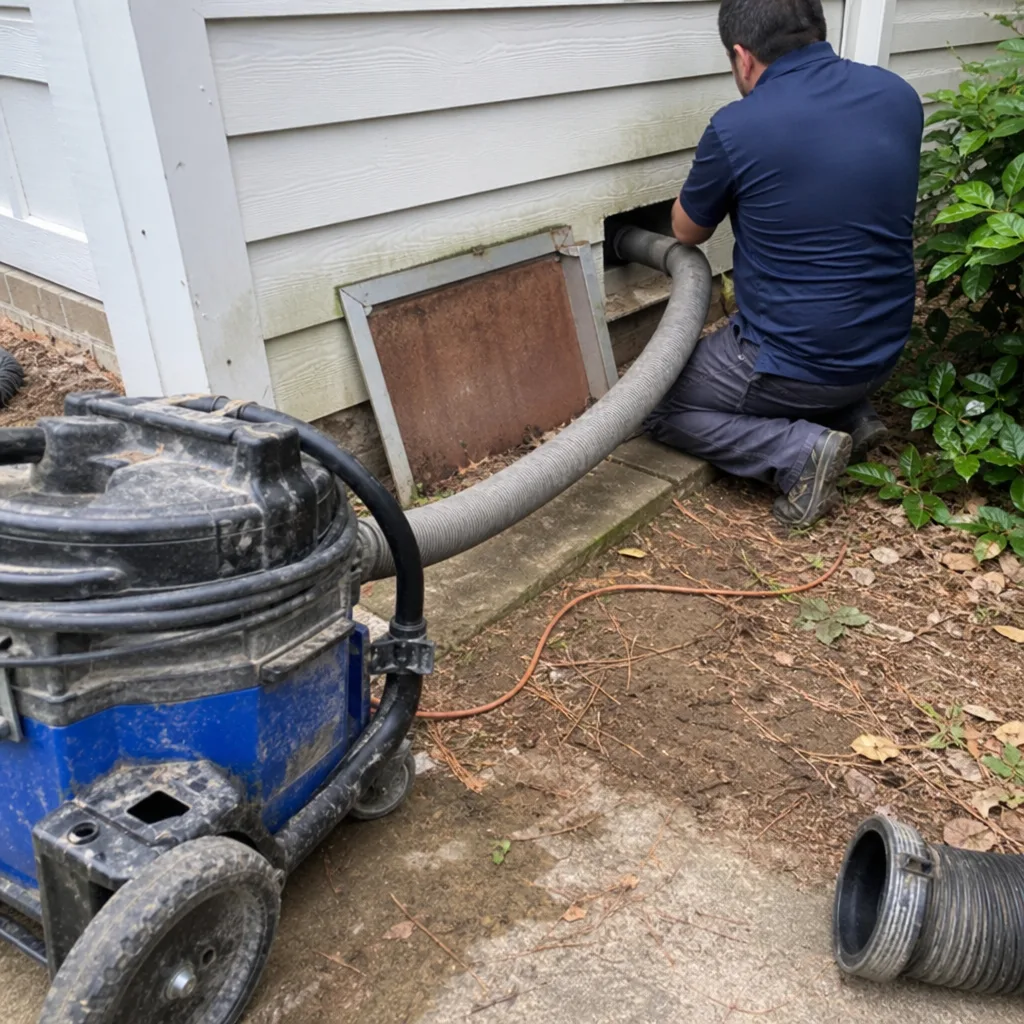
Professional cleaning rests on mechanical agitation plus HEPA extraction. A rotary brush system physically lifts what’s bonded to the duct wall, and a HEPA-rated vacuum captures the dislodged material under negative pressure so it never ends up in the room. That’s the standard the two-person crew works to. Portable shop vacs don’t get close to that result; they agitate less and contain almost nothing.
What a good seasonal visit covers:
- A full inspection from the register to the air handler.
- Mechanical agitation of every reachable duct run with a rotary brush system.
- Negative-air containment with an air filtration unit during the work.
- HEPA extraction of every run.
- A look at the coil, blower, and any duct connections for leaks or disconnects.
- Sealing and repair, on the same visit, where needed.
If you also want your dryer vent cleaning done on the same seasonal schedule, spring is a good time for that too. A full-pathway routine includes the HVAC cleaning of the air handler’s coil and blower, not just the ducts, because that’s where the heating and cooling seasons deposit the most residue.
Common Mistakes to Avoid
- Cleaning only when it smells. Odor is a late signal. By the time a Five Points home smells musty, moisture has already been sitting in the system through a cooling season, and the fix now includes drying and sealing, not just cleaning.
- Running the densest filter year-round. A high-MERV filter in a system that wasn’t designed for it restricts airflow and strains the blower. Match the filter to the season and to the system’s rating, not to the highest number on the shelf.
- Cleaning after the mode switch instead of before. The pre-season slot catches damage before it runs through a full season. Cleaning post-season is still useful, but you’ve spent the season running a compromised system.
- Ignoring the outdoor unit. The condenser and fresh-air intake sit outside. If leaves and pollen collect there, they get pulled into the return every time the system runs. Clear it at every seasonal switch.
- Letting a second contractor handle duct repair. If the inspection finds a disconnected run, the leak keeps dumping air until the second visit. In-house repair closes the gap the same day.
- Assuming seal-tight means nothing’s leaking. Duct leakage hides in unconditioned attic and crawlspace runs, which is where most Five Points duct leaks live. An inspection has to look at the runs, not just the registers.
- Skipping the fall check because cooling just ended. The heating switch is the more stressful event for connections, not the cooling switch. Fall is the inspection you can’t skip.
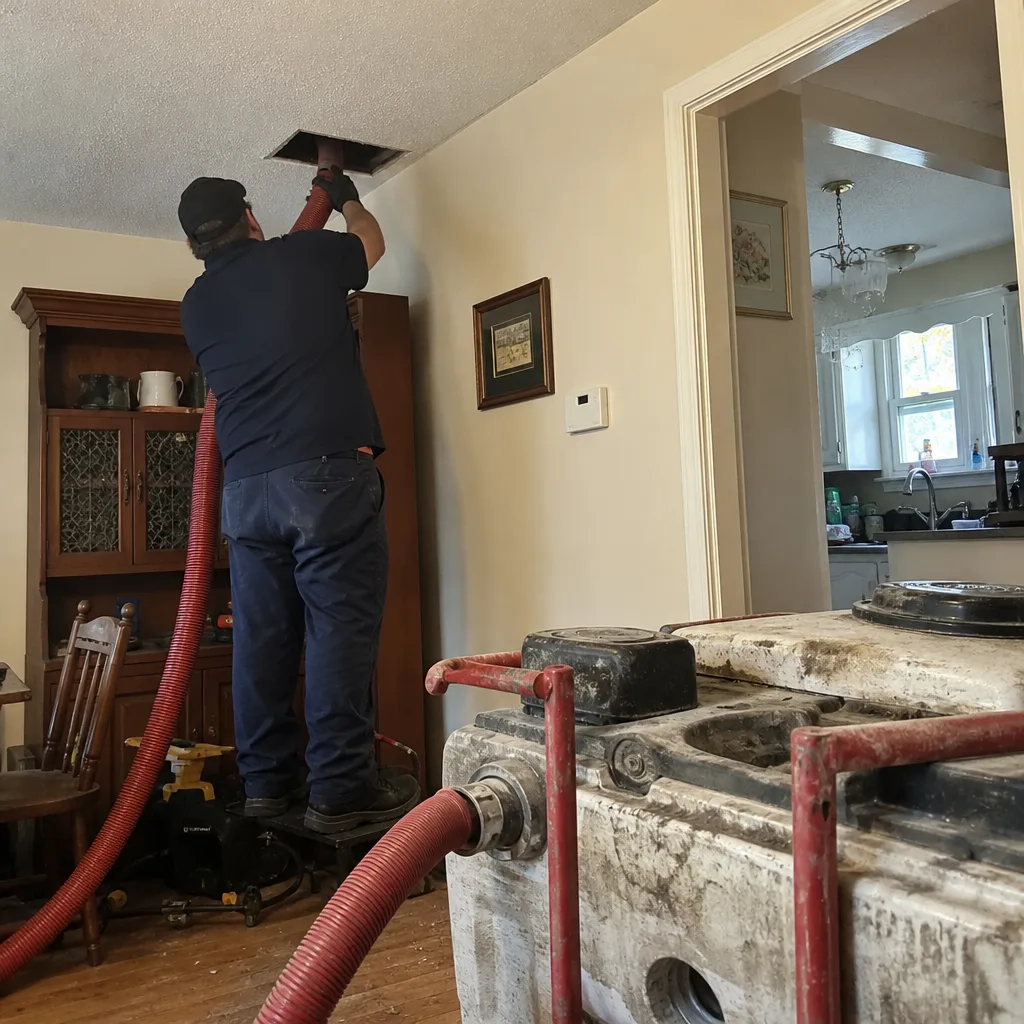
See the difference
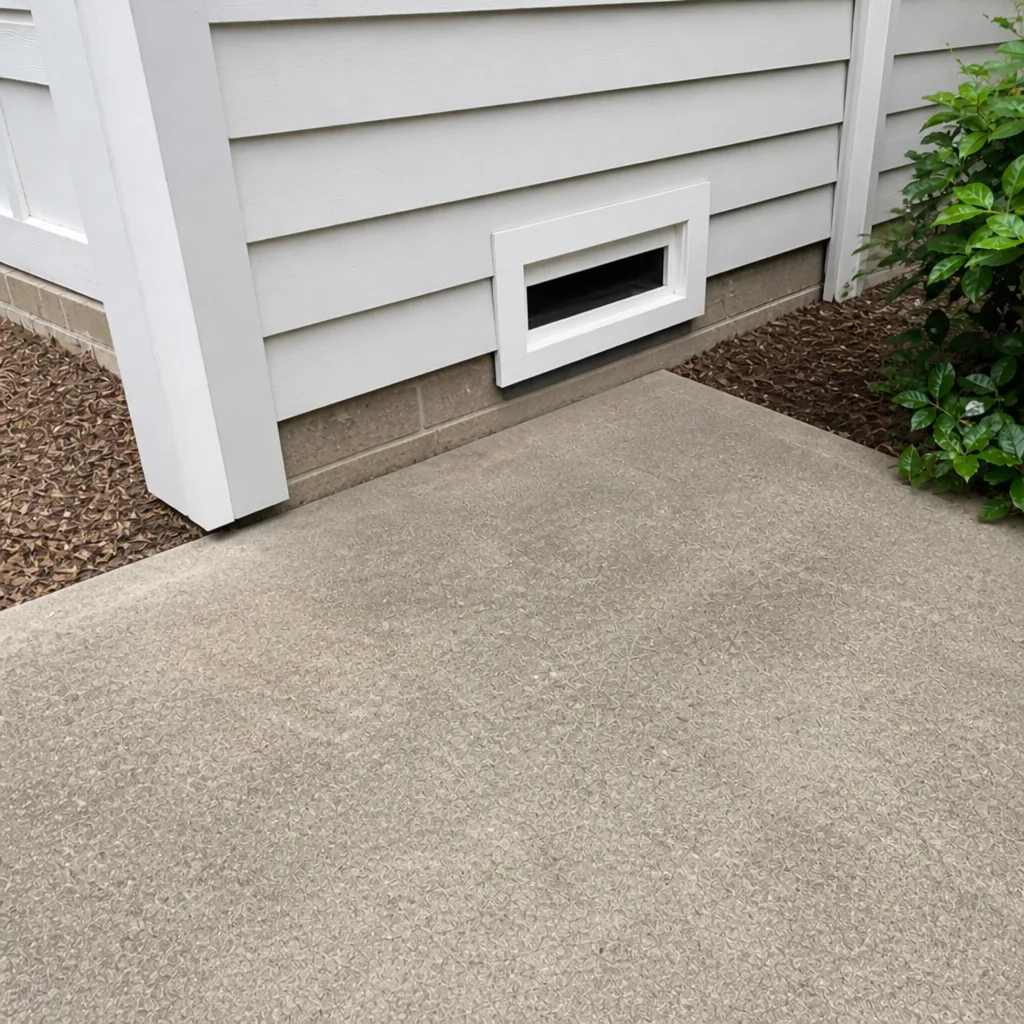
 Before
 After
 Before
 After
 Before
 After
When to Call a Professional
Call Air Duct Cleaning Five Points when you notice musty odor at a register, uneven airflow between rooms, or a persistent hot-dust smell during heating. Those are all signals that something in the system needs a proper look, not another filter. If you’ve just moved into a Five Points home and don’t know when the ducts were last cleaned, a baseline inspection makes sense before the next mode switch. If your spring or fall inspection turns up a leak, that’s a same-visit repair job, and not something to hand off to a second contractor.
Our technicians have up to 10 years of experience, and we use professional-grade equipment on every job: Rotobrush rotary brush systems for agitation, Nikro HEPA extraction for capture, and Abatement Technologies air filtration for negative-air containment during the work. We inspect, clean, and seal in one visit, then walk you through the before-and-after photos of your own ducts so you can see what changed. Air Duct Cleaning Five Points offers free estimates in Five Points. Call (877) 523-6180. We answer 24/7. Fast dispatch from 7am to 7pm, Sunday through Friday.
Frequently Asked Questions
Most Five Points homes benefit from a deep cleaning once a year, timed to late spring before the cooling season, or in fall before the heating season, with the other switch used as an inspection check. Homes with heavy pollen exposure, pets, or older duct layouts may get more value from two lighter inspections a year rather than one deep cleaning. If you’re unsure which fits your home, an inspection will tell you. Call (877) 523-6180 for a free estimate. We answer 24/7, with fast dispatch from 7am to 7pm, Sunday through Friday.
April and September are the two best months to schedule, because both land just before a major heating or cooling switch and let a cleaning or sealing job take effect across the coming season. April catches the pre-cooling window, and September catches the pre-heating window. Slots in both months fill sooner than homeowners expect. Call (877) 523-6180 to book ahead of the switch.
Yes, because humidity loads the system with moisture that stays in the duct interior unless it’s addressed with good airflow, sealing, and regular cleaning. A damp system collects dust and biological material faster than a dry one, and the moisture can come from condensation on cold duct surfaces in unconditioned spaces. An inspection with a moisture check will tell you if your Five Points home has that pattern. Call (877) 523-6180 for a free estimate.
Yes. Air Duct Cleaning Five Points performs duct repair and sealing in-house, so if an inspection turns up a loose joint, a disconnected run, or a gap in a flexible duct connection, we can seal it on the same visit. That closes the gap the same day rather than after a second contractor’s schedule catches up. Call (877) 523-6180. We answer 24/7.
A proper cleaning uses mechanical agitation plus HEPA extraction: a rotary brush system to physically dislodge material from the duct wall, and a HEPA-rated vacuum to capture the dislodged debris under negative pressure. Air Duct Cleaning Five Points runs Rotobrush rotary brush systems and Nikro HEPA equipment, with Abatement Technologies air filtration for negative-air containment during the job. That’s the standard remediation work uses, not the typical shop-vac approach. Call (877) 523-6180 for a free estimate.
Yes, and especially in Five Points’ winter heating cycle, because that’s when dust bakes onto the coil and blower, restricting airflow long after the ducts are clean. Cleaning the ducts without addressing the coil leaves half the pathway dirty. The five-service routine includes HVAC cleaning as a separate step, and it matters most right before the heating season. Call (877) 523-6180 to schedule.
The Bottom Line
Seasonal duct care in Five Points isn’t one chore repeated twelve times a year. It’s a sequence tuned to what the system faces in each season: pollen loading in spring, humidity in summer, debris and connection stress in fall, and coil residue in winter. The highest-value slots are April and September, just before the mode switches, because that’s when cleaning and sealing have the most runway. Change filters to match the season, keep indoor humidity in your target range, clear the outdoor unit at every switch, and schedule inspections at both switch points. That structure is what a year-round plan actually looks like.
If you’d rather have this handled by someone who knows what to look for, call Air Duct Cleaning Five Points at (877) 523-6180 for a free estimate. We answer 24/7. Fast dispatch from 7am to 7pm, Sunday through Friday. Our technicians have up to 10 years of experience, and we use Rotobrush, Nikro, and Abatement Technologies equipment from the register to the air handler. Visit Air Duct Cleaning Five Points to see the full service menu. Book ahead of the next mode switch and let a single visit cover inspection, cleaning, and sealing together.
Written by the team at Air Duct Cleaning Five Points.