
Last updated November 24, 2026
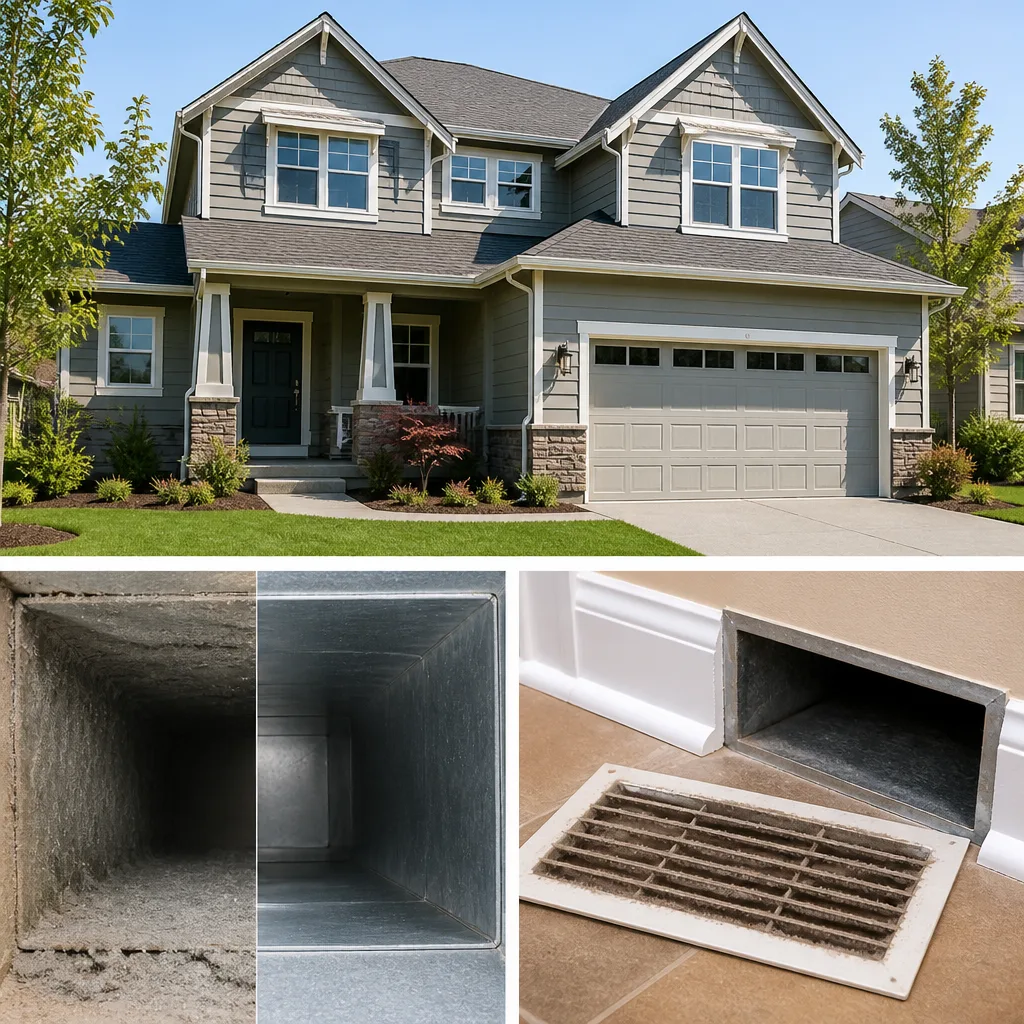 Whole-home duct cleaning
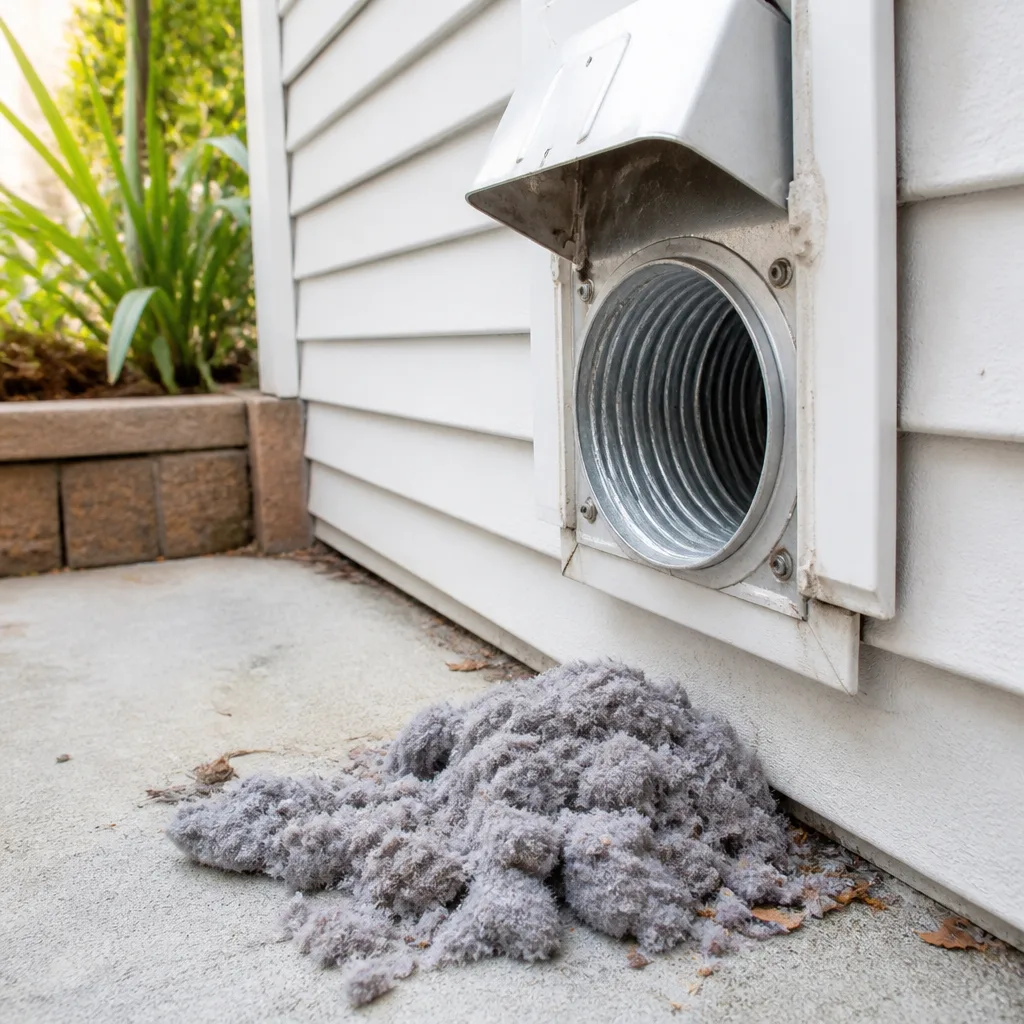 Dryer vent cleaning
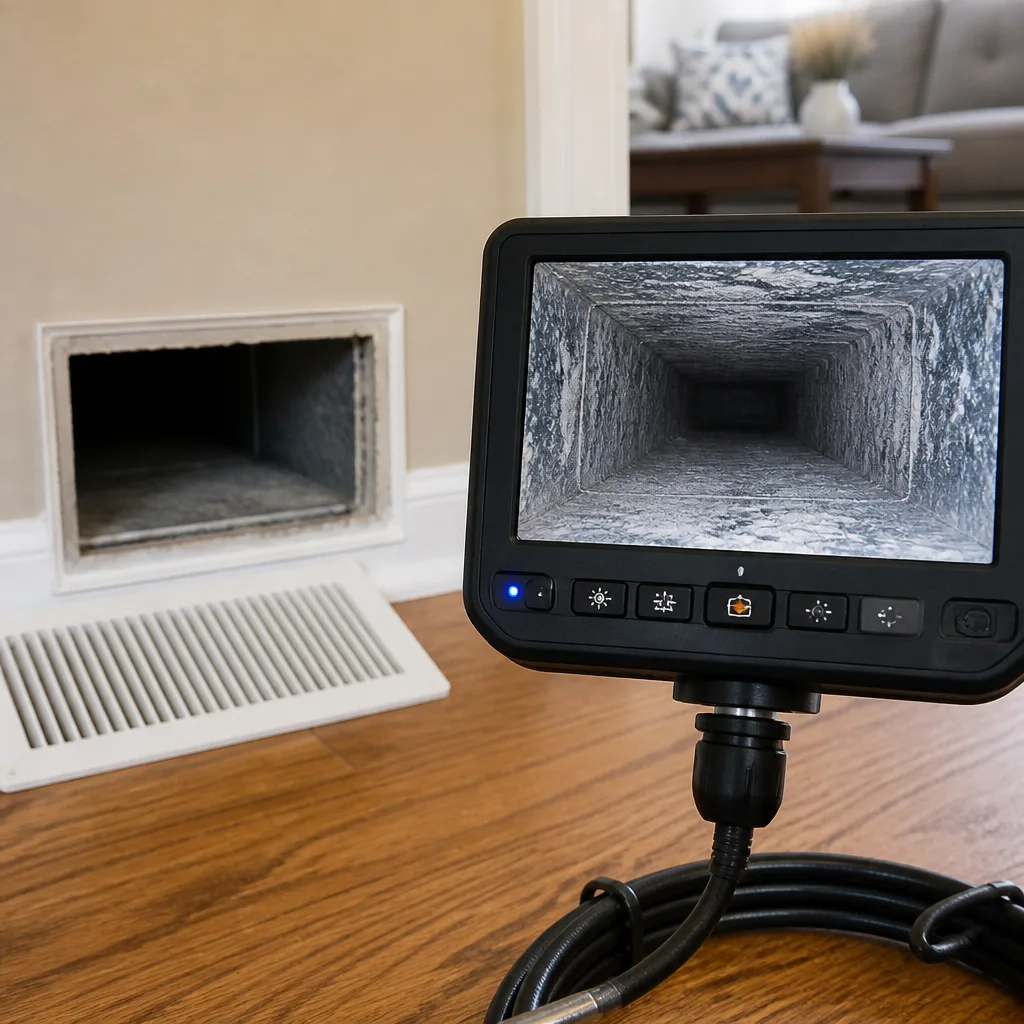 Camera inspection
 Sanitizing & deodorizing
Whole-system duct and dryer vent check with before-and-after photos - you see exactly what came out of your vents
That "$99 whole-house special" is a bait ad - the real number appears once they are in your hallway, or the "clean" is a shop-vac at the register. We photograph the inside of your ducts before and after instead.
Air Duct Cleaning Maintenance Checklist for Five Points Homeowners
Changing your filter on a schedule feels productive. But a clogged return duct can defeat a fresh filter in under a week, and no calendar reminder catches that. Most duct advice hands you a number (“clean every three to five years”) and calls it maintenance. That’s a cleaning schedule, not a monitoring system. In Five Points, where a lot of homes sit on pier-and-beam foundations with long duct runs through crawl spaces and attics, the ducts themselves are the part you can’t see and the part that changes quietly. This guide gives you a structured routine built around observable indicators instead of arbitrary intervals: a register-by-register airflow test, filter metrics worth logging, humidity trends that hint at leakage, and a crawl-space and attic checklist for the construction common here. You’ll also get clear thresholds for when a task moves from “watch it yourself” to “call a technician.”
Quick Answer
A practical air duct maintenance checklist in Five Points combines four habits: quarterly airflow checks at every register using a white tissue, filter logging that tracks pressure drop rather than just replacement dates, seasonal humidity readings near return vents, and a twice-a-year visual inspection of accessible duct runs in the crawl space and attic. Anything you can’t observe or measure goes on the professional side: a full mechanical cleaning with rotary-brush agitation and HEPA extraction, plus sealing of leaks those inspections reveal. The monitoring you do between visits is what tells a technician where to look.
Styles & brands we work with
- Whole-home duct cleaning
- Dryer vent cleaning
- Camera inspection
- Sanitizing & deodorizing
Table of Contents
- Why Your Duct Checklist Is a Monitoring System, Not a Schedule
- The Room-by-Room Register Inspection (Flashlight and Tissue Test)
- Filter Metrics: What to Track Beyond the Replacement Date
- Logging Humidity Near Return Vents Across Seasons
- Crawl Space and Attic Duct Checks for Five Points Homes
- Threshold Indicators: When to Call a Technician
- What a Professional Duct Cleaning Visit Actually Involves
- Building Your Annual Monitoring Calendar
Why Your Duct Checklist Is a Monitoring System, Not a Schedule
A calendar tells you when to act. A monitoring system tells you whether to act. Those are different jobs, and only one of them responds to what’s actually happening inside your ductwork. Two homes on the same street in Five Points can have wildly different duct conditions: one has a tight, well-sealed system that holds airflow for years, the other has a disconnected run in the crawl space quietly pulling in soil air and losing half its static pressure before the air ever reaches a bedroom. A fixed cleaning interval treats both homes the same, which means one gets serviced too often and the other not often enough.
Monitoring wins because duct problems announce themselves early through a handful of signals you can actually observe. Weak airflow at one register while others are strong. A fine dust film that returns days after you wipe it. A musty smell when the system first kicks on. Humidity that stays high in the middle of summer no matter what the thermostat says. Each of those is a clue pointing at a specific part of the system, and each one is something you can write down.
The monitoring mindset also changes how you buy service. When you call a technician, you’re not saying “clean my ducts.” You’re saying “the master bedroom register is weak and the return-side humidity climbs every July.” That’s a diagnostic request, and it gets answered differently. At Air Duct Cleaning Five Points, that’s the difference we see between a routine booking and a visit that actually fixes something.
Everything below is a monitoring routine. Four of the sections are yours to run. Three describe what a professional handles. Keep them separate in your head and you’ll spend less money and get better airflow.
The Room-by-Room Register Inspection (Flashlight and Tissue Test)
This is the foundation of the whole checklist, and it costs one flashlight and one box of tissues. You’re checking two things at every supply register: how much air is coming out, and how clean it looks going in. Do it once a quarter, and write results down so you can compare across visits. Memory is not a measurement.
What you’ll need
- A bright flashlight, angled into the register opening
- A single-ply white tissue (not a tissue box, one sheet at a time)
- A notebook or phone note for each room’s reading
The step-by-step
- Turn the system fan to “on” so it runs continuously during the test. This gives you steady airflow instead of the on-off cycling of heating or cooling.
- Hold the tissue flat against the register grille, roughly five or six inches out. Let it flap. Note whether it’s pulled hard, flutters, or barely moves.
- Shine the flashlight into the register throat and look at the first six inches of duct. You’re looking for dust film, debris, insect activity, or visible gaps between duct sections.
- Move to the next room and repeat. Record each register as “strong,” “weak,” or “no flow.”
- Compare rooms. Rooms on the same branch of ductwork should read similarly. A single weak register on an otherwise strong branch usually means a closed damper, a crushed flex run, or a disconnected joint.
- Check return grilles too. A return that pulls strongly in one room and weakly in another is a sign that the return-side balance is off, which affects the whole system.
What the reading means
Widespread weak airflow points to a filter problem, a blower issue, or a duct system that’s undersized for the house. One weak register points at that specific run. In Five Points homes, where ductwork often threads through tight crawl spaces and around pier-and-beam structure, a crushed or disconnected flex run is common and shows up as exactly that isolated weak register. If a register that used to read strong reads weak a quarter later, something changed, and that’s worth a technician’s eyes.
Filter Metrics: What to Track Beyond the Replacement Date
Replacement date is the least useful filter metric. Pressure drop is the useful one. Pressure drop (sometimes called static pressure difference) measures how hard the blower has to work to push air through a loaded filter. As a filter loads with dust, that number climbs. When it climbs high enough, airflow to the whole house drops, the blower runs longer and hotter, and the system loses efficiency. A filter can be early in its replacement interval and already be choking the system.
If you have access to a manometer, or a technician can install a pair of pressure test ports around the filter, you can log the reading. A basic handheld manometer reads the difference between the return side and the supply side of the filter. Check it once a month. What matters is the trend, not the absolute number; most residential filter setups want to be replaced well before the reading doubles from its clean baseline. Log the clean reading when you install a fresh filter, then log it monthly so you can see when it crests.
If you don’t have a manometer, log these other filter metrics instead:
- MERV rating – note the MERV of the filter you installed. Higher MERV captures more particles but adds resistance, so the right rating depends on your blower’s capabilities, not just on wanting cleaner air.
- Visual loading – a quick look at the filter face monthly tells you whether debris is building fast, slowly, or not at all.
- Replacement date and interval – still worth logging, just not the only thing.
- Seasonal notes – note whether loading accelerates in spring pollen season or during heavy heating months.
One filter fact worth internalizing: a clean filter is only as effective as the ductwork upstream of it. A leaky return duct in Five Points can pull in dust-laden attic or crawl space air downstream of the filter, depositing it into the air handler and the supply runs. If your filters load fast no matter what, that’s a signal about the ducts, not the filter. A professional-grade cleaning using Rotobrush rotary agitation and Nikro HEPA extraction removes accumulated debris from the ducts themselves, so a fresh filter actually stays clean. That’s the whole point of pairing a proper air duct cleaning with your monitoring routine.
Logging Humidity Near Return Vents Across Seasons
Humidity readings near return vents are an underused diagnostic. The air returning from your living space should read close to the air in the room it came from. If it consistently reads high, something is putting moisture into the airstream, or the system isn’t moving enough air to pull humidity out. Both are worth tracking across seasons so you can tell whether the pattern is stable or worsening.
An inexpensive digital hygrometer placed within a foot of a return grille does the job. Read it at the same time of day, once a week, and log the number. Note the outdoor conditions on the day of each reading. You’re building a small dataset.
What the trend tells you
- Summer readings persistently high – typically an air conditioning capacity or airflow issue. If the system is undersized, or duct leakage is pulling hot humid attic air into the return side, humidity stays elevated even with the unit running.
- Winter readings persistently high – often a sign of crawl space moisture finding its way into the ducts. In Five Points, where a lot of homes sit over open or semi-conditioned crawl spaces, this is a common cause and worth inspecting.
- Sharp jumps after rain – points at duct leakage pulling in outside air, or a return duct in an unconditioned space that’s drawing humid air from around it.
- High readings right where the thermostat sits – a mismatch between room humidity and return humidity signals the system is fighting infiltration or duct leakage, not just doing its job.
Log three seasons of readings before drawing conclusions. A single summer of high numbers can be one unusually wet year. A pattern across two summers and a winter is a duct or equipment issue, and that’s the point where a technician should take a look. When a technician visits, they can pressurize the system and use smoke or pressure readings to find the specific leak. That’s a different job from cleaning, and it’s the reason we keep duct repair and sealing in-house: if an inspection turns up a disconnected run or a gap at a joint, we can fix it on the same visit rather than booking a second contractor.
Crawl Space and Attic Duct Checks for Five Points Homes
Five Points has a lot of pier-and-beam construction with duct runs through the crawl space, and a lot of older homes where attic ductwork feeds second floors or additions. Those unconditioned spaces are where duct problems hide, and they’re worth two inspections a year, once before cooling season and once before heating season. This is a “look, don’t touch” checklist. If your crawl space is tight, dark, or you’re not comfortable getting under the house, leave it to a technician.
What to look for in the crawl space
- Duct support – runs should be supported at regular intervals and not sagging. Sagging runs collect dust at the low point and restrict airflow.
- Insulation condition – the outer insulation jacket on flex duct should be intact, with no tears or compressed sections. Missing insulation means sweating ducts and condensation, which leads to mold.
- Connections and joints – the standard failure points. Look for tape that’s peeling, mastic that’s cracked, or flex duct pulled off a boot entirely. A disconnected run is a major airflow loss.
- Vapor barrier condition – a torn or bare crawl space vapor barrier lets soil moisture rise into the ducts. Inspect it alongside the ducts.
- Pest evidence – rodent droppings, nesting material, or chewed flex duct. Rodents tunnel into flex duct works and generate a distinct odor.
What to look for in the attic
- Insulation contact on flex runs – attic ducts should not be buried under loose-fill insulation in a way that compresses them. Compressed flex loses airflow capacity.
- Condensation and staining – dark streaks or wet duct jackets signal inadequate insulation or a leak.
- Register boots – the point where the duct meets the ceiling register is a common seal failure, and heated or cooled air escapes straight into the attic through the gap.
- Accessibility for future service – note whether runs are reachable for cleaning and repair. If equipment can’t get to a run, it can’t be cleaned properly.
Write down what you find. Photograph what you can. When you call for service, those notes tell a technician exactly which run is worth inspecting first. Our technicians have up to 10 years of experience, and that experience is most valuable when you can point them at a crawl space run with a sag and a torn jacket instead of asking them to start from scratch. If you prefer to skip the crawl space entirely, that’s the right call, and it’s something a professional inspection covers.
Threshold Indicators: When to Call a Technician
The value in a monitoring system is knowing exactly when a task crosses from “watch it” to “call someone.” Here are the thresholds. When any of these triggers, treat it as a call-the-technician signal rather than something to keep monitoring.
Airflow signals
- One or more registers read “no flow” while others read strong on the same branch
- Multiple rooms that used to read “strong” read “weak” on the same quarterly check
- Homeowner-side adjustments (filter change, register damper open) don’t restore airflow within a week
Filter and dust signals
- Filters load heavily within two to three weeks of replacement, repeatedly
- Dust returns to a recently cleaned surface within days rather than weeks
- Visible dust plumes blow out of a supply register when the system starts
Humidity and moisture signals
- Return-side humidity reads high across two seasons without explanation
- Moisture or condensation visible on duct surfaces in the crawl space or attic
- Persistent musty odor when the system first starts up, particularly in humid weather
Crawl and attic findings
- Any disconnected or pulled-off duct run
- Visible flex duct damage from rodents
- Sagging runs, torn insulation jackets, or peeling sealant at joints
If any two of these triggers hit at the same time, don’t wait for the next quarterly check. Call and describe exactly what you observed. The call is free, and the estimate gives you a clear picture of what’s actually wrong. You’ll get one flat price per system agreed before work starts, so there’s no surprise once a technician is on-site.
What a Professional Duct Cleaning Visit Actually Involves
The most important thing to know about professional duct cleaning is that the good version involves mechanical agitation, not just vacuuming. A shop vac hooked to a register pulls what it can reach at the surface. It does not dislodge the dust bonded to duct walls, and it does not hold the particulate in a sealed containment system while the work happens. That’s why surface cleaning produces a visible improvement that fades in a few weeks. The ducts were never actually cleaned.
Here’s what the process looks like when it’s done properly:
- Inspection – every accessible run is inspected before cleaning. Disconnected runs, torn flex, and leaking joints are noted, because those need repair, not just cleaning.
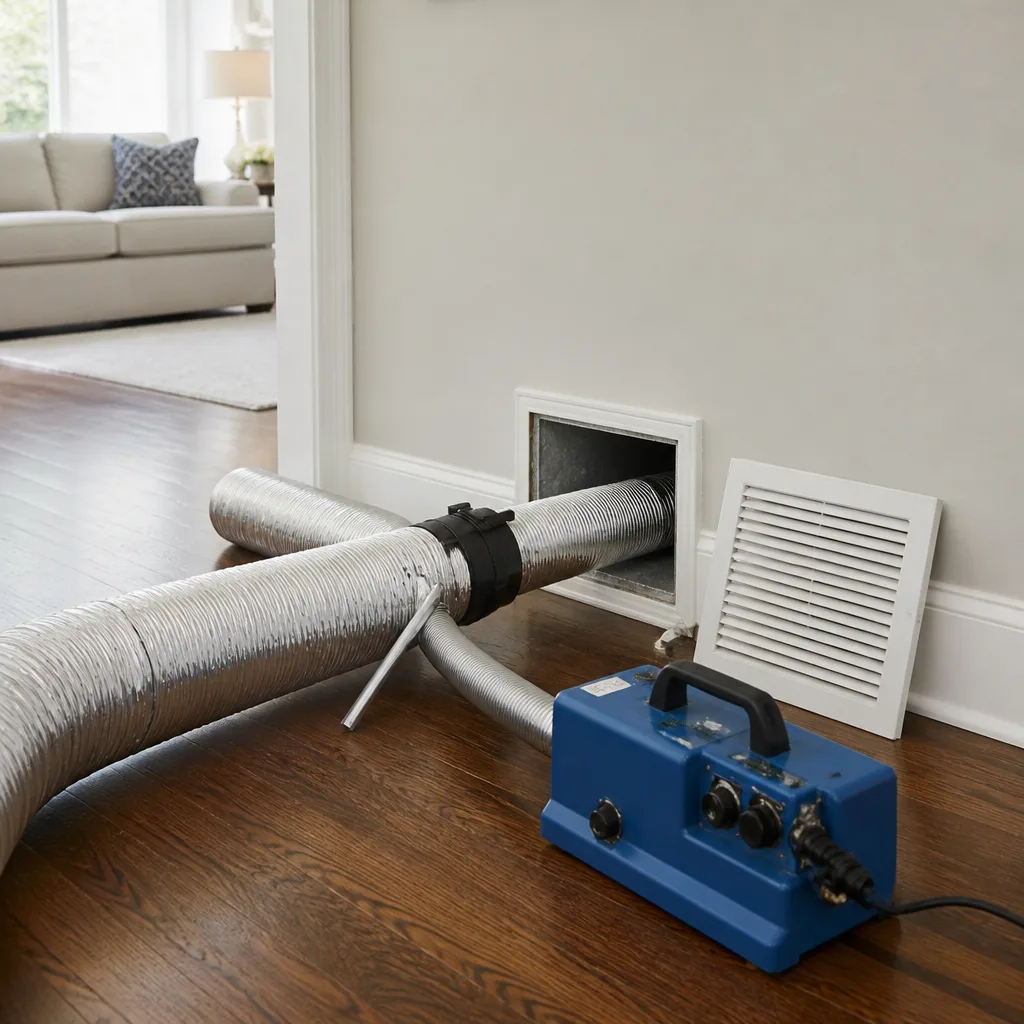
- Containment setup – negative-air pressure is established so dust and debris released during cleaning get pulled into filtration equipment and stay there. Abatement Technologies air filtration units are the equipment standard for this step, and setting it up correctly is the difference between cleaning ducts and redistributing debris through the house.
- Mechanical agitation – Rotobrush rotary-brush systems physically dislodge debris from duct walls. The brush action is what lifts years of bonded dust film; a vacuum alone can’t do it, and in our experience rotary agitation is the step most cut-rate services skip.
- HEPA extraction – Nikro HEPA-rated vacuum equipment pulls the dislodged material out of the airstream and captures it. HEPA-rated capture is what keeps fine particulate from migrating back into your living space.
- Register and boot cleaning – registers, grilles, and boots are cleaned separately, because dust tends to concentrate at those transition points even when the run itself stays clean.
- Sanitizing – a sanitizing treatment after cleaning addresses microbial growth in damp areas. It’s an add-on but worth considering when a musty odor has been present.
- Repair and sealing – gaps, disconnected runs, and leaky joints found during inspection get repaired and sealed during the same visit. In our work, this step matters as much as cleaning: an unsealed duct system pulls in exactly the dust you just paid to remove.
Airflow returning to normal across the whole house is the result of all those steps working together. Cleaning alone doesn’t fix leaks, and sealing alone doesn’t remove the debris already inside. Whole-system work means both, from the register to the air handler. If your system also needs the air handling unit cleaned, HVAC cleaning covers that part of the pathway, so the whole system is addressed in a coordinated way rather than in isolated visits.
Building Your Annual Monitoring Calendar
Here’s what a full year of monitoring looks like on a calendar. The point isn’t a rigid schedule; it’s a rhythm. You’re checking the same things at the same times so trends surface and patterns are recognizable.
Monthly
- Log filter pressure drop reading, if you have a manometer
- Visual look at filter loading
- Quick sound check: does the blower sound the same as last month, or slightly louder?
Quarterly
- Full room-by-room register test with flashlight and tissue
- Compare to last quarter’s notes and record any changes
- Note any new weak registers, dust findings, or odor issues
Seasonal (spring and fall)
- Crawl space duct inspection before cooling season
- Attic duct inspection before heating season
- Humidity log review across the transition between seasons
- Replace the filter going into the heavy-use season
Every three to five years, or when monitoring flags it
- Professional duct cleaning with rotary-brush agitation and HEPA extraction
- Full system inspection during the cleaning visit, with repair and sealing as needed
- Air quality upgrades review if monitoring shows a persistent root-cause issue (more on that below)
One more piece of the calendar worth noting: your dryer vent has its own monitoring rhythm. Lint accumulation in the duct is a fire hazard, and the sign that a dryer vent cleaning is due is a drying cycle that runs longer than it used to. That’s a separate checklist from your HVAC ducts, but both live in the same monitoring mindset.
Upgrading beyond cleaning
Sometimes the data points at a root-cause fix rather than a cleaning interval. Persistent dust from a dirty return, allergic sensitivity that shows up in breathing comfort, or humidity that stays high no matter how the system runs can be addressed with whole-home air quality equipment. We recommend and install Aprilaire and Honeywell air quality products, including whole-home filtration, humidification, and air purifiers, when the monitoring data supports it. That’s a conversation, not a mandatory upsell. If your monitoring doesn’t suggest a real need, a good technician will tell you so.
For a full picture of what monitoring and maintenance look like together across Five Points, the Air Duct Cleaning Five Points overview page is worth reading alongside this checklist.
Common Mistakes to Avoid
- Treating a filter change as full duct maintenance. A fresh filter doesn’t clean the ducts, and if the return side is leaking, it doesn’t even protect the air handler the way it should. The filter is one component in a larger system.
- Using a “vacuum it yourself” shop vac on ducts. A shop vac at a register cannot agitate dust bonded to duct walls, and it can’t hold fine particulate in containment while you work. In our experience, this approach often redistributes debris into the living space instead of removing it.
- Ignoring one weak register because others work fine. A single weak register is the single most diagnostic reading in the whole inspection routine. It almost always points to a specific disconnected or crushed run that’s hurting the whole system. In Five Points crawl spaces, this is one of the most common findings.
- Skipping the crawl space entirely. Ductwork in the crawl space holds up less well than ductwork inside the conditioned space, and it’s the part you can’t see from the living room. A twice-a-year look is what catches problems before they become expensive.
- Replacing a filter without checking whether a dirty return is the cause. If filters load fast, the ducts are pulling in dust from somewhere. Fixing the leak is the actual fix; a faster filter-change schedule isn’t.
- Booking a cleaning and skipping repair on the same visit. Finding a disconnected run during cleaning and booking a second contractor is lost time and lost efficiency. If repair is needed, it should happen in the same mobilization.
- Not logging readings. Without last quarter’s notes, you can’t tell whether a weak register is new or has been that way for a while. The log is the whole point.
See the difference
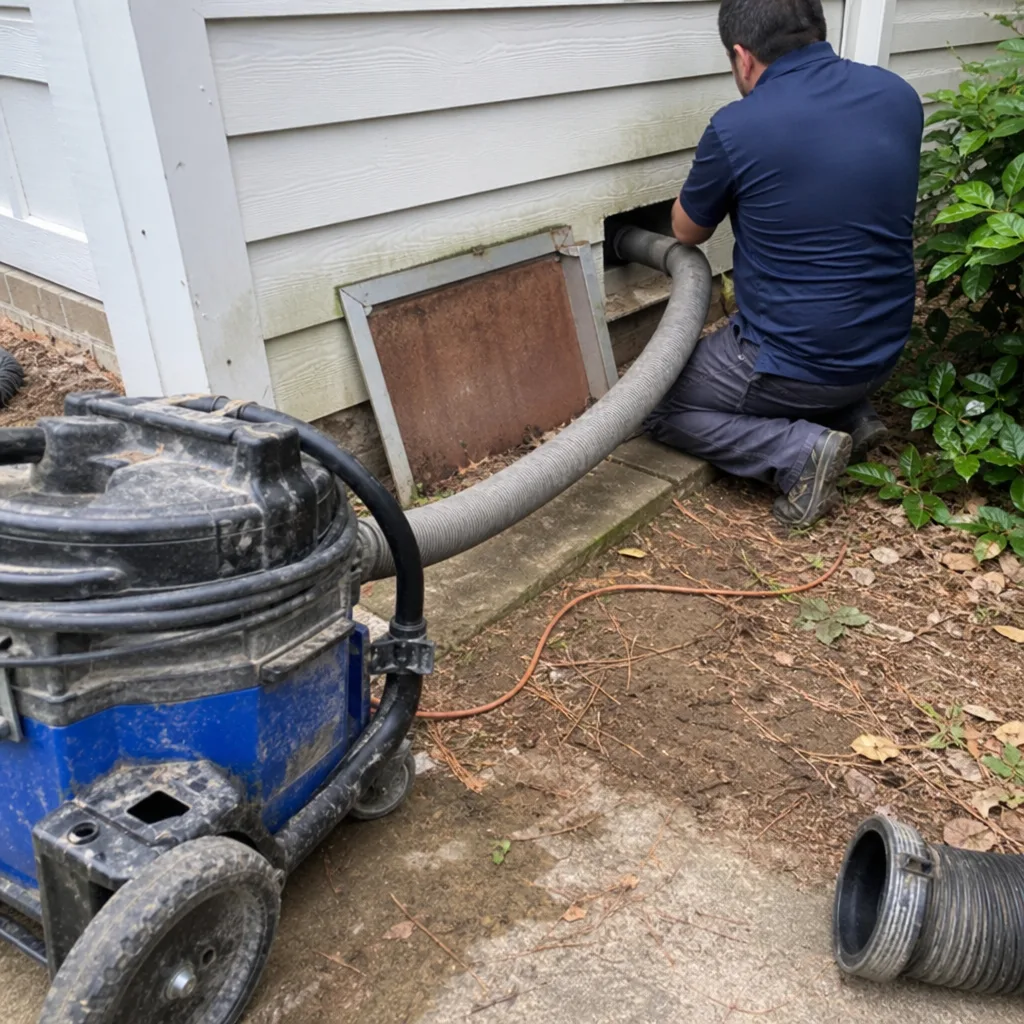 Before
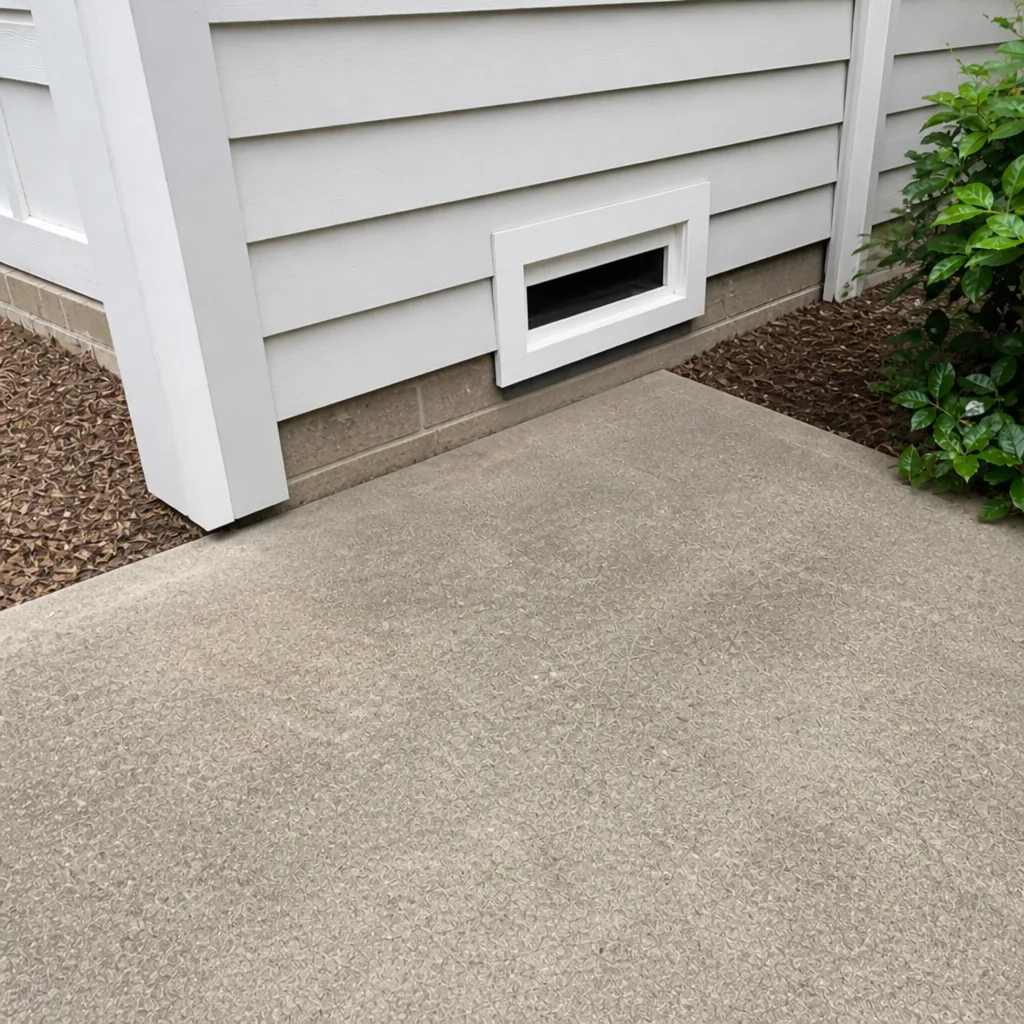 After
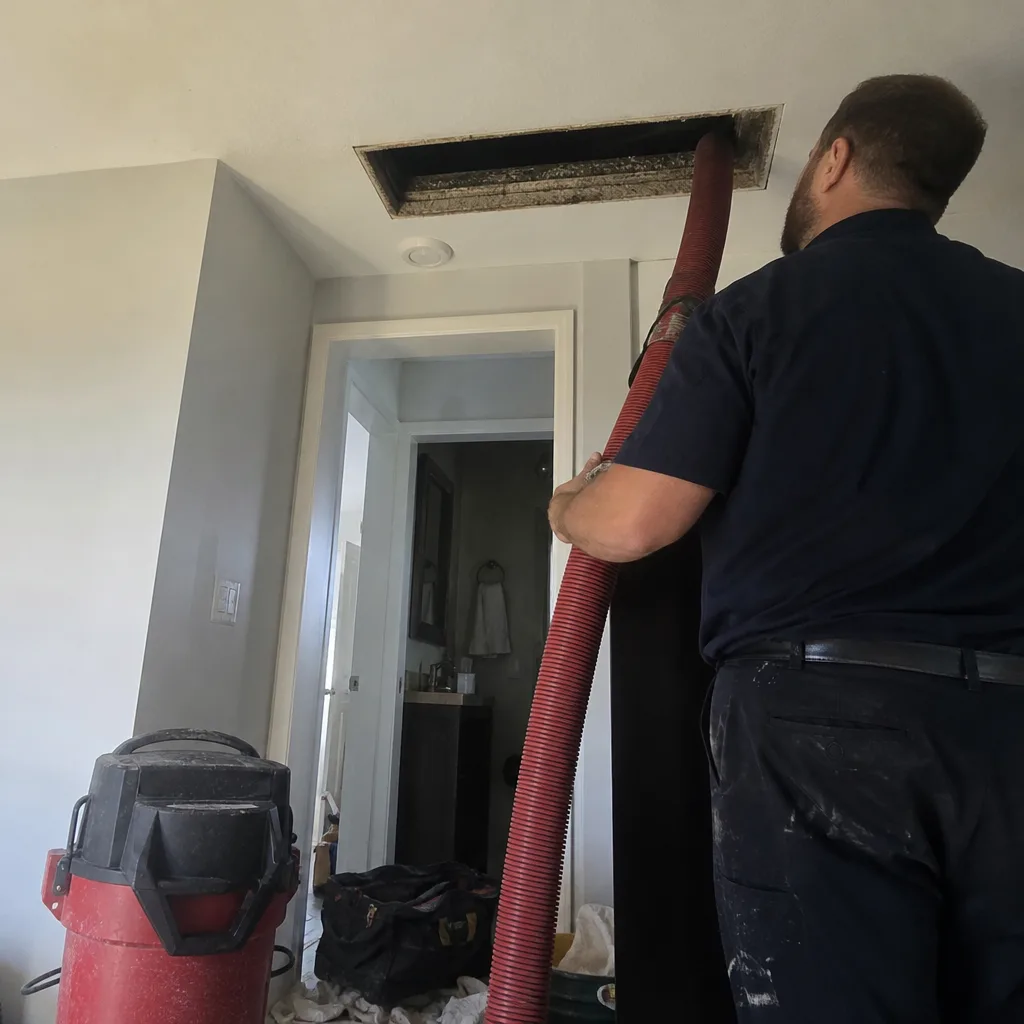 Before
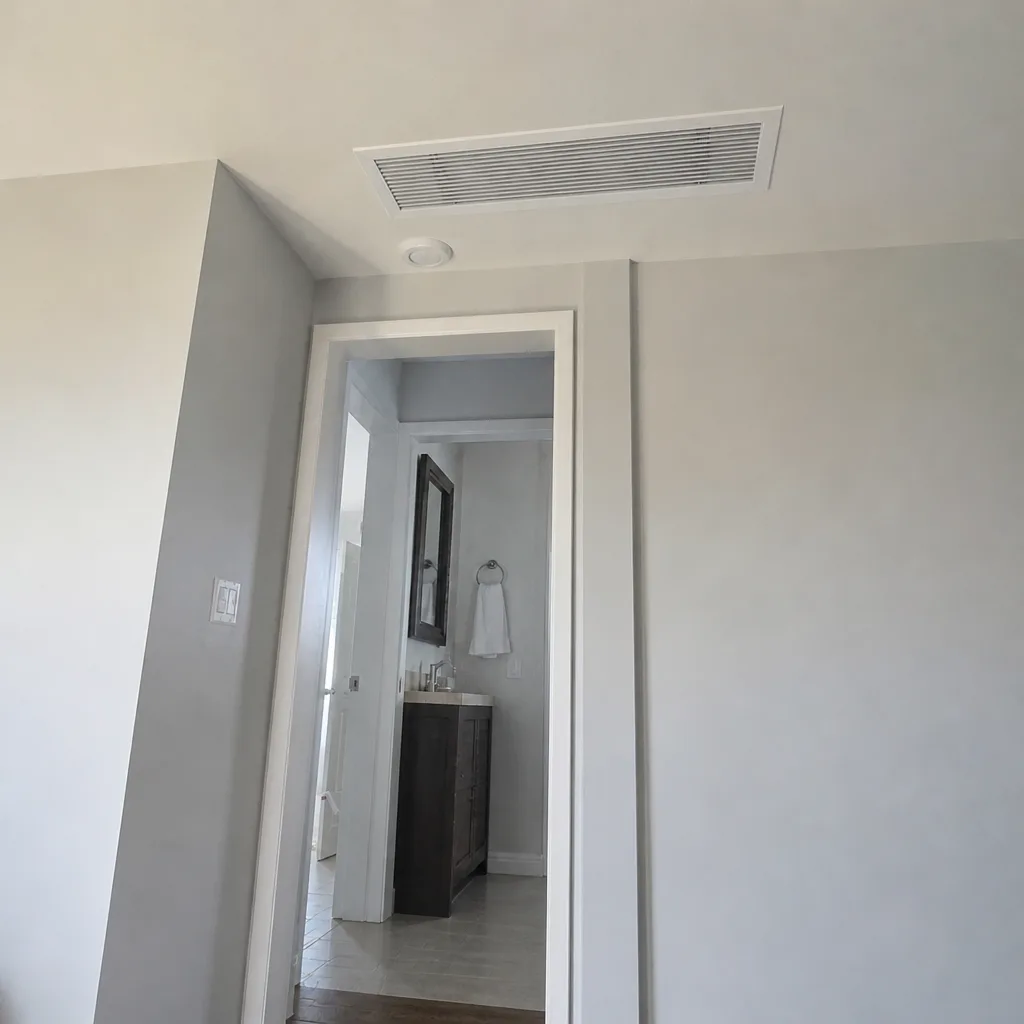 After
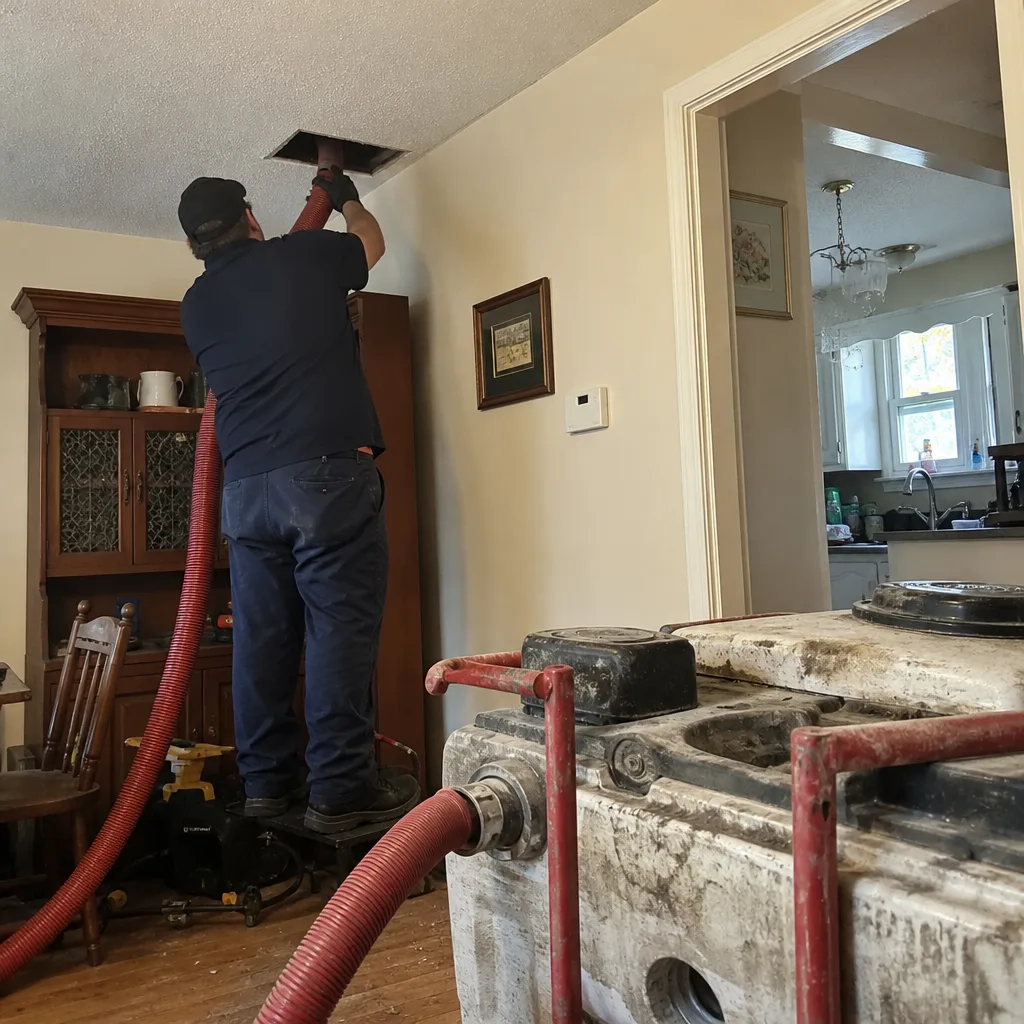 Before
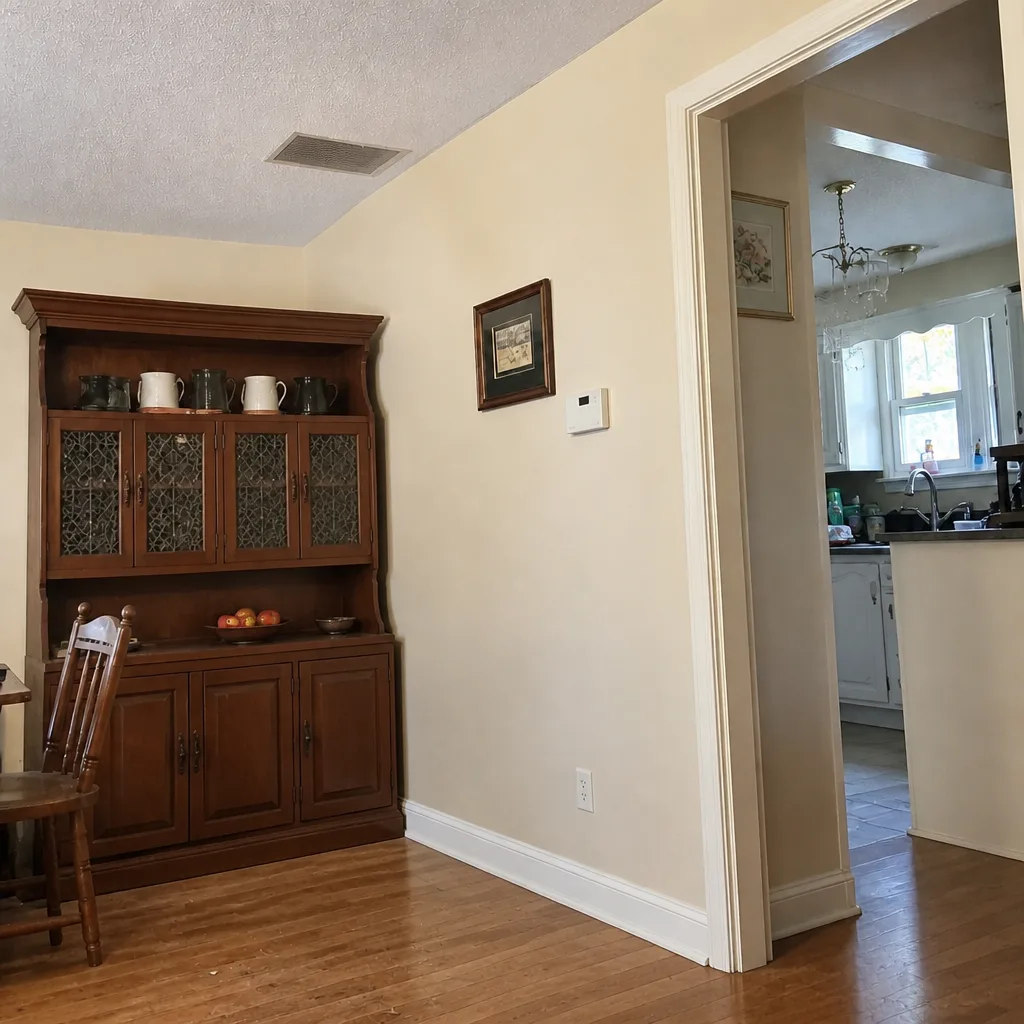 After
When to Call a Professional
Call when monitoring produces a threshold trigger: a register that reads weak with no obvious cause, persistent high humidity on the return side across two seasons, visible duct damage in the crawl space or attic, filters that load within weeks, or a musty odor that returns after cleaning. Call if the house has never had a professional inspection and the ductwork is older or you don’t know its history. Call before you buy the house, if you’re purchasing in Five Points. And call when the inspection log becomes the thing you’re managing rather than the thing managing your home’s air quality.
Air Duct Cleaning Five Points provides free estimates in Five Points. We’ve worked the same construction patterns common here, and we know where duct problems show up. Call us at (877) 523-6180 for a free estimate. We answer 24/7. Fast dispatch from 7am to 7pm, Sunday through Friday.
Frequently Asked Questions
For most homes, every three to five years is a reasonable baseline, but the actual right interval depends on what monitoring shows. Homes with heavy dust, pets, recent renovation, or known duct leakage need it sooner. Homes with tight, sealed ductwork can go longer. The monitoring checklist tells you which category you’re in; the calendar is a fallback, not the answer. Call (877) 523-6180 when monitoring flags a threshold.
Three observable signs point to dirty ducts: dust that returns within days of wiping a surface, visible debris inside the first six inches of a supply register, and a musty smell when the system first starts up. A weak register on a branch that otherwise reads strong is a separate issue (likely a disconnected or crushed run), and it’s a call-a-technician trigger either way. A flashlight inspection at the register throat is the fastest way to see what’s actually there.
A cheap cleaning typically stops at surface vacuuming, which doesn’t dislodge bonded dust or hold fine particulate in containment. A proper cleaning uses mechanical agitation plus HEPA extraction with negative-air containment, so debris is physically removed rather than redistributed. We use Rotobrush rotary-brush systems for agitation and Nikro HEPA-rated vacuum equipment for extraction, with Abatement Technologies filtration units handling containment. If a quote doesn’t mention what equipment is being used, ask. Anything short of mechanical agitation plus HEPA capture is not a full cleaning.
Usually, yes. Fast filter loading means dust is entering the system faster than a filter can reasonably capture it, and that almost always means a leak on the return side is pulling in crawl space or attic air. Replacing the filter more often treats the symptom. Fixing the duct leak treats the cause. A technician can pressure-test the return side to find the specific leak, then repair and seal it during the same visit.
Yes. Our service list covers air duct cleaning, HVAC cleaning, dryer vent cleaning, air quality and sanitizing, and duct repair and sealing. That means a single visit can address the whole airflow pathway from the register to the air handler, rather than splitting the work across multiple contractors. Call (877) 523-6180 for a free estimate and we’ll tell you which services your inspection actually calls for.
Hard-to-reach crawl spaces are common in Five Points, and they’re exactly where duct problems hide. A professional inspection covers what you can’t comfortably reach. If you’re monitoring on your own, inspect what you can safely access and note anything you can’t reach, because that’s the priority area for a technician’s first look. Never force your way into a crawl space that isn’t safe or clear.
The Bottom Line
Duct maintenance isn’t a cleaning schedule. It’s a monitoring system, and it works on indicators you can observe: register airflow, filter pressure drop, humidity trends, and visual inspection of the duct runs in your crawl space and attic. Run the routine yourself with a flashlight, a tissue, a hygrometer, and a notebook. Log the readings so trends surface. Learn the threshold triggers so you know when a task moves from monitoring to a call. When it does, get a proper professional cleaning with mechanical agitation and HEPA extraction, plus repair and sealing for anything the inspection turns up. Five Points homes have their own construction patterns, and monitoring catches them where the calendar can’t.
Ready to move from monitoring to action? Call Air Duct Cleaning Five Points at (877) 523-6180 for a free estimate. We answer 24/7. Fast dispatch from 7am to 7pm, Sunday through Friday. One flat price per system, agreed before work starts. You’ll see before-and-after photos of your own ducts, not stock images.
Written by the team at Air Duct Cleaning Five Points.