
Last updated November 24, 2026
 Whole-home duct cleaning
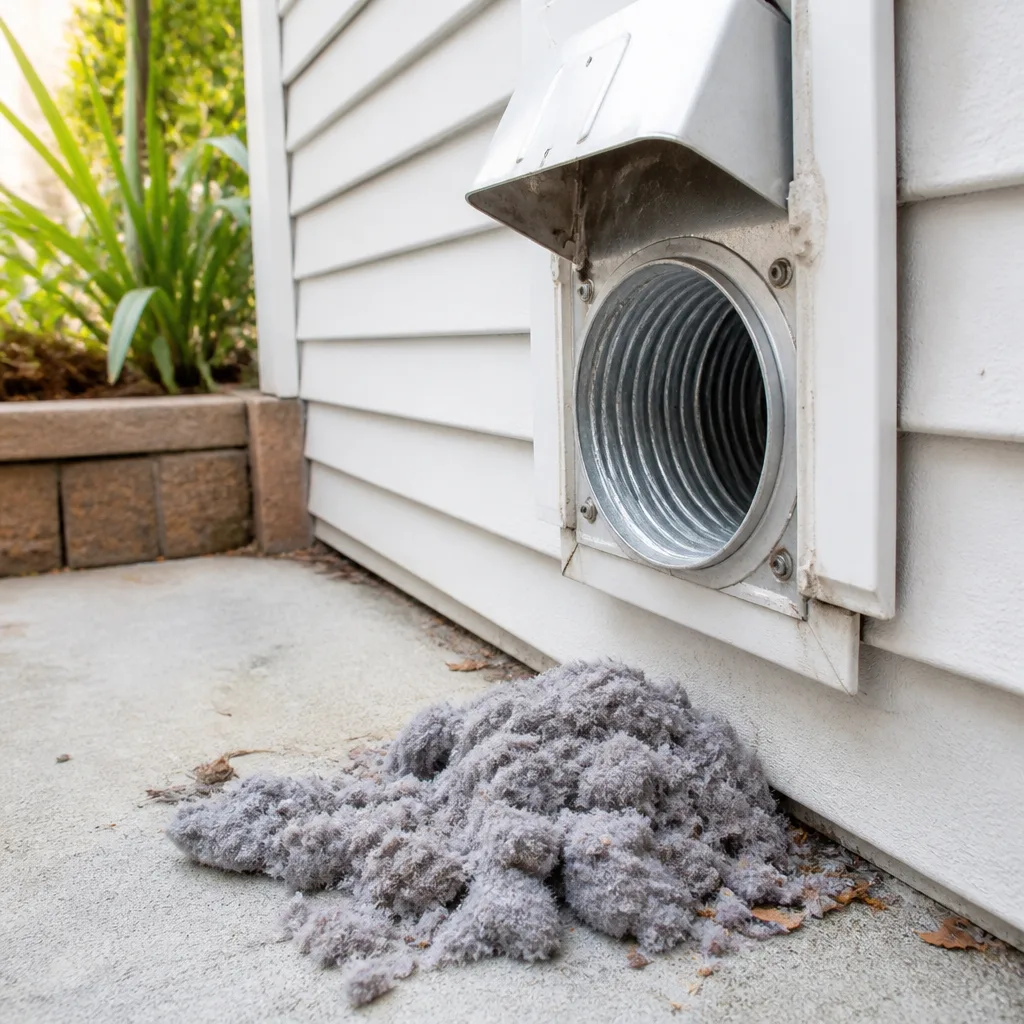 Dryer vent cleaning
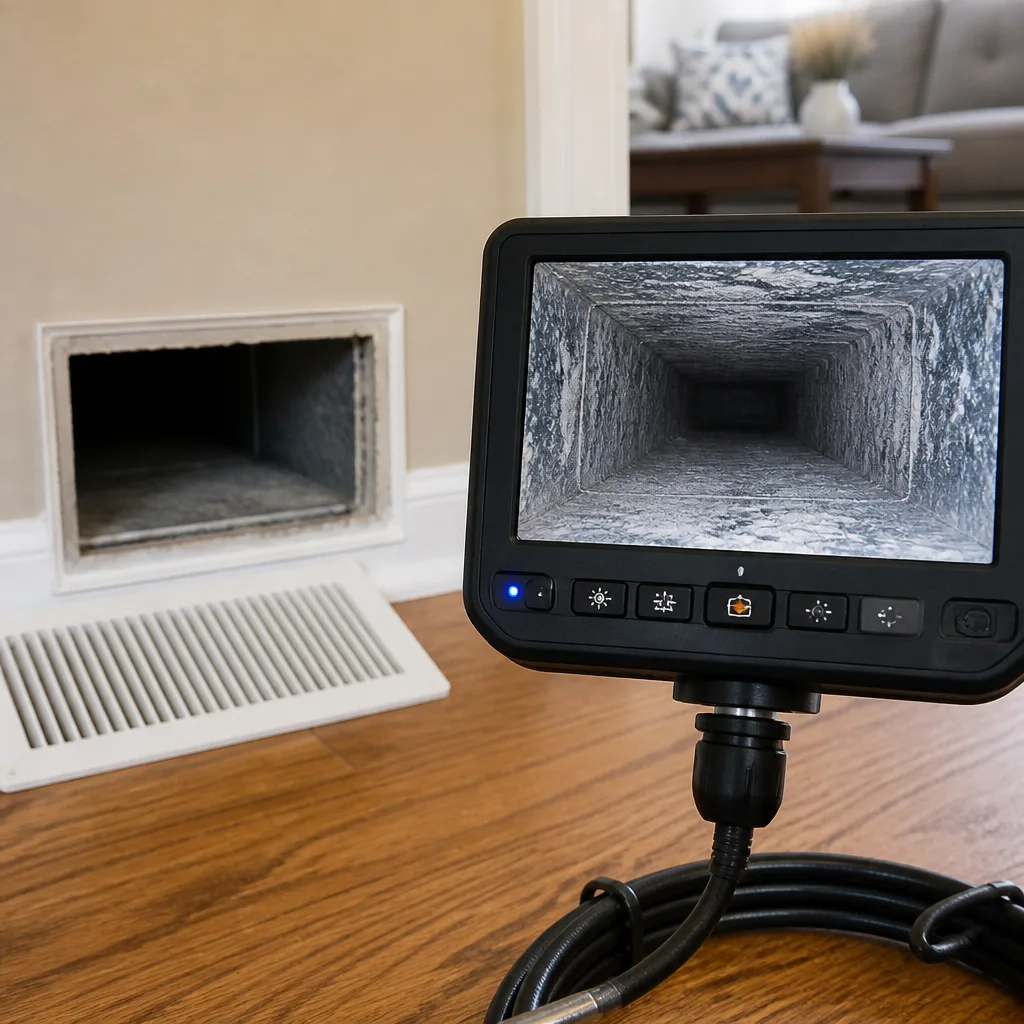 Camera inspection
 Sanitizing & deodorizing
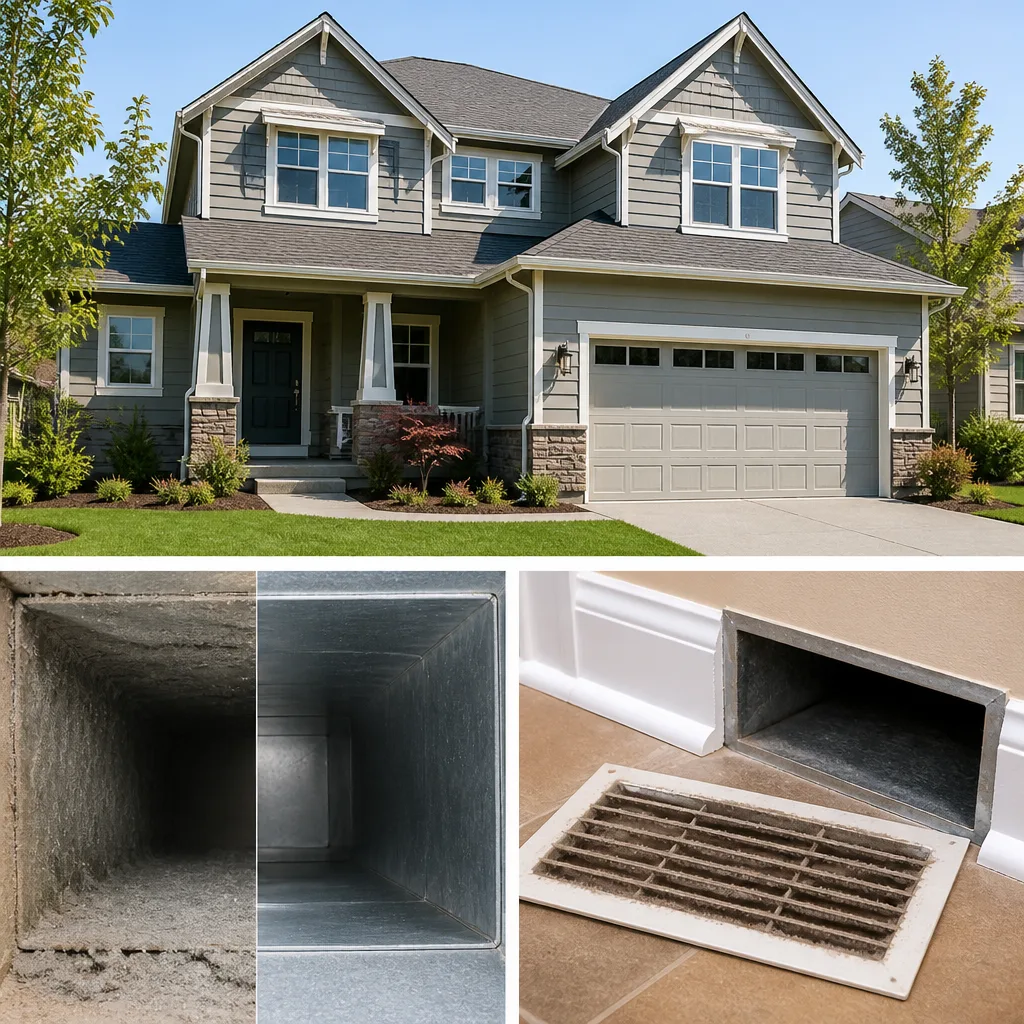
Whole-system duct and dryer vent check with before-and-after photos - you see exactly what came out of your vents
That "$99 whole-house special" is a bait ad - the real number appears once they are in your hallway, or the "clean" is a shop-vac at the register. We photograph the inside of your ducts before and after instead.
Air Duct Cleaning Emergency Preparedness Guide for Five Points Homes
Most homeowners think of duct cleaning as spring cleaning for the air: a nice-to-have that removes some dust and makes the house smell fresher. That’s the misconception. The ducts in a Five Points home are the one part of the building you never see, and they carry every cubic foot of air your family breathes, through every season, across every renovation, and past every gap in the building envelope. When something goes wrong in that hidden pathway – a disconnected run, a clogged dryer vent, a musty smell that won’t leave – the problem has usually been building for months. This guide covers how to prepare for and respond to those situations: what “emergency” actually means for ductwork, how a Five Points home’s airflow system fails, what you can check yourself, and when to bring in professional equipment.
Quick Answer
Air duct emergencies in Five Points are rarely sudden. Most are slow failures – disconnected duct runs, blocked dryer vents, mold growth from summer humidity, or airflow restrictions from a clogged air handler – that show up as dust, musty odors, or uneven cooling before they become urgent. Real emergencies are narrower: a dryer vent fire risk, a collapsed or fully blocked duct, or visible mold spreading through the system. For everything else, a scheduled inspection with mechanical cleaning and HEPA extraction is the correct response, and it’s usually best done before the problem peaks.
Styles & brands we work with
- Whole-home duct cleaning
- Dryer vent cleaning
- Camera inspection
- Sanitizing & deodorizing
Table of Contents
- What Counts as an Air Duct Emergency?
- How Do You Prepare Your Ducts Before an Emergency?
- Why Five Points Homes Face Specific Airflow Risks
- Dryer Vent Blockage: The Most Underrated Emergency
- Humidity, Mold, and the Summer Duct Problem
- A Five Points Homeowner’s Duct Emergency Checklist
- What Professional Duct Service Involves
- Duct Repair and Sealing After the Emergency
What Counts as an Air Duct Emergency?
In our experience, the word “emergency” gets applied to a lot of duct problems that are really maintenance. Sorting them matters, because the right response to a slow buildup is very different from the right response to a blocked dryer vent.
True emergencies
- Lint-choked dryer vent: a dryer vent packed with lint is a fire risk, not a comfort issue. If clothes take two cycles to dry or the dryer cabinet gets hot to the touch, stop using the dryer until the vent is cleaned.
- Collapsed or disconnected duct run: if a room gets zero airflow while the rest of the house is fine, a run may have separated or crushed. That’s a structural fix, not a cleaning.
- Visible mold in the airstream: if you can see mold on a register or inside the duct opening, the air handler is likely spreading spores through the house. This needs professional containment.
- Pest intrusion: rodents or birds nesting in a duct run means contaminated air plus possible chewed insulation. Containment and sanitizing are required.
Not emergencies (but worth scheduling)
- Dust buildup on registers and furniture
- Musty smell that appears in certain seasons
- Uneven airflow between rooms
- Allergy symptoms that flare indoors
These are signs the system is loaded with debris and worth addressing, but they don’t justify panic pricing. We treat them as scheduled service. For the full scope of what that involves, the Air Duct Cleaning Five Points page walks through the equipment and process we use.
How Do You Prepare Your Ducts Before an Emergency?
The best duct emergency is the one you prevented. Preparedness in a Five Points home comes down to knowing your system before something breaks.
- Map the system. Know where the air handler, main trunk, and each branch run sit. Photograph them. If a technician arrives after a failure, you’ve saved half an hour of discovery.
- Label the registers. Number every supply and return register and note which room it serves. This is your diagnostic tool when airflow goes wrong.
- Note the air handler filter size. Buy two at a time. A clean filter is the single cheapest protection for the blower and coil.
- Check the dryer vent outside. Look for the exterior flap. If it’s packed with lint, that’s a warning sign. If you can’t reach it safely, get it professionally cleaned.
- Set a reminder for a duct inspection. Get an annual look at the whole pathway. Note any seasonal pattern – for Five Points that’s usually late summer.
- Keep a service log. Filters, cleaning dates, repairs, and any technician’s notes. This log makes future calls faster and clearer.
Preparedness is mostly paperwork and observation. It’s not a repair. And it makes the difference between a homeowner who catches a leak early and one who discovers it after a run has saturated the insulation in a hallway ceiling.
Why Five Points Homes Face Specific Airflow Risks
Five Points is a dense residential neighborhood in the older part of the area, and that shapes how ductwork ages here. Homes in Five Points tend to fall into two groups: older houses with original sheet-metal ducts or early flex runs that have never been resealed, and newer renovations where a modern system was grafted onto an old envelope. Both groups have the same vulnerability: gaps.
A typical Five Points duct run was installed with mechanical joints, taped seams, and short flex connectors. Twenty-plus years of seasonal expansion and contraction opens those joints. Cool air escapes through the gaps into a wall cavity or attic. That alone is a small loss. The bigger problem is the reverse – hot, humid outside air gets pulled into the return side, condenses on cooler duct surfaces, and drips into insulation. That’s where mold and musty smells come from.
The Five Points climate amplifies this. Long, humid summers mean duct surfaces inside a house are often close to dewpoint. A small gap in an attic run doesn’t just lose efficiency; it wets the insulation below. That pattern is why some Five Points homes develop a persistent musty smell in August that no amount of register cleaning fixes.
The other local factor is house age. In older Five Points homes, duct paths run through interior wall chases and closets, not convenient chases with clean access. When a run needs repair, the plan has to account for how the duct was originally routed. Our HVAC cleaning work in older Five Points houses often starts with locating the runs before touching them.
Dryer Vent Blockage: The Most Underrated Emergency
A dryer vent is the shortest, hottest, most fire-relevant duct in any Five Points home. When we’re asked to rank in-home duct risks, dryer vent blockage sits above everything else. It’s the only duct in the house that has a heat source feeding it, and the fuel is the lint from every load of laundry.
Signs of a blocked dryer vent
- Clothes take two cycles to dry
- The dryer cabinet or door is hot to the touch
- Lint collects around the outside vent or on the wall near the dryer
- A musty or scorched smell in the laundry room
- The vent flap outside doesn’t open while the dryer runs
What to do when you see these signs
- Stop using the dryer.
- Unplug it and pull it away from the wall. Check the short connector hose for a full lint plug.
- Clear lint from the lint filter housing and the back of the dryer.
- Check the exterior vent flap. If it doesn’t open freely, blockage is downstream.
- If the blockage is inside the wall, book a professional cleaning before running another load.
Our dryer vent cleaning service uses rotary brushes and HEPA extraction on the vent line, so lint packed into elbows and turns comes out instead of just getting pushed. Preparedness step here is simple: get the vent cleaned on a schedule, and never let lint live inside the line.
Humidity, Mold, and the Summer Duct Problem
The Five Points summer pattern is hot and humid, with long stretches of high relative humidity from June through September. That’s the season when duct problems go from annoying to actual. The mechanism isn’t mysterious: cooling coils condense moisture, and duct surfaces below the dew point collect it. In a system with leaking joints and disconnected flex runs, that moisture lands on dust, insulation, and framing.
- A musty smell that gets stronger when the AC runs
- Faint dark speckling around a register or on the duct collar
- Water staining on the ceiling near a duct chase
- Allergy symptoms that calm down when you leave the house
- A house that never quite feels dry
If you see visible mold, don’t run the system. The air handler will move spores through the whole house. This is where containment matters. We deploy Abatement Technologies air filtration units to maintain negative-air pressure during cleaning, which is the same standard used in remediation work rather than standard residential duct cleaning.
For homes where the issue is chronic moisture rather than active mold, the answer is often to fix the source: seal the duct runs, correct the return sizing, and add whole-home humidity control. This is where Aprilaire and Honeywell products come in – a humidifier or dehumidifier sized correctly to the Five Points house envelope fixes the root cause rather than masking the musty smell every August.
A Five Points Homeowner’s Duct Emergency Checklist
When something goes wrong with airflow in a Five Points home, this is the order we’d want a homeowner to work through. It’s written to sort the safe, easy checks from the ones that should trigger a call.
Before you call anyone
- Change the air filter if it’s been more than a few months. A clogged filter mimics low airflow across the whole house.
- Walk the house and confirm which rooms have weak airflow and which don’t. A single weak room is a branch issue. Weak everywhere is a filter, blower, or trunk issue.
- Check the dryer vent flap outside. Any lint visible is a sign to stop using the dryer.
- Look for water staining at ceiling registers, especially on the upper floor.
- Sniff test. A musty smell that gets stronger when the AC runs points to moisture in the duct pathway.
When you call, have this ready
- The house age and approximate square footage
- How many supply and return registers you can identify
- The name of any previous duct or HVAC work you’ve had done
- Photos of any staining, mold, or visible lint
- A short note on how the house has been feeling – humid, dusty, uneven, musty
That last item matters more than most homeowners realize. A clear description of what the house is doing cuts the diagnostic time on our first visit and gets the right service booked.
What Professional Duct Service Involves
The gap between a professional duct cleaning and a cheap one is mostly equipment. A shop vac and a register brush can knock dust off the visible surface, but it doesn’t dislodge what’s bonded to the duct wall and it doesn’t capture what comes loose. So the debris drifts through the house after the technician leaves.
The two-stage method we use
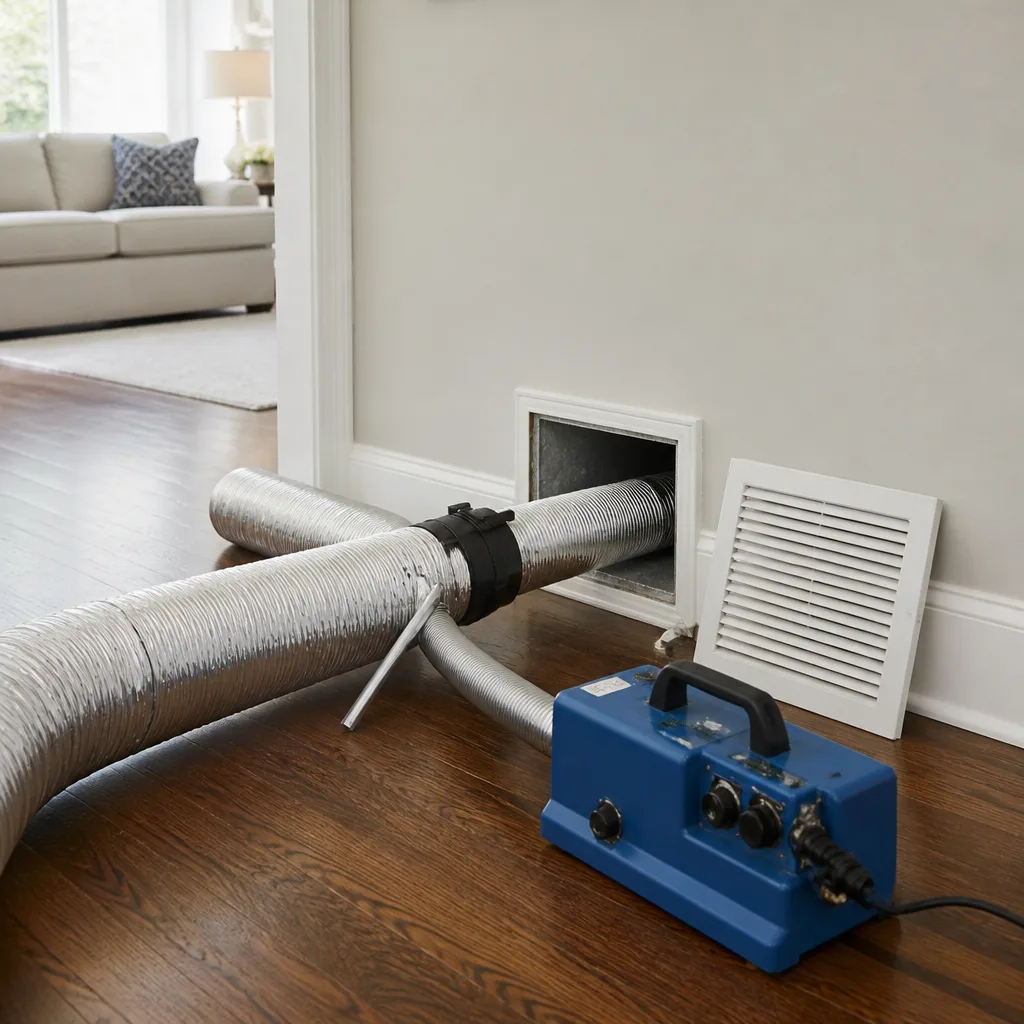
Mechanical agitation plus HEPA extraction is the only method that actually cleans the full duct pathway. Stage one uses a Rotobrush rotary-brush system to physically break up debris from the duct wall – the same approach used to clean boiler flues because it doesn’t rely on airflow to do the work. Stage two captures everything the brush dislodges with Nikro HEPA-rated vacuum equipment running on negative pressure at the vent opening. The two stages have to happen together. A rotary brush without HEPA capture just fills the house with dust. A HEPA vacuum without mechanical agitation doesn’t reach the debris on the duct wall.
Containment and coverage
For heavier jobs – mold, pest intrusion, or a system that hasn’t been cleaned in a long time – we also deploy Abatement Technologies air filtration units to maintain negative-air containment throughout the house, which is the standard remediation contractors work under. This is not what you get from a two-hour register vacuum.
Full-scope service means the same team handles cleaning, air quality, and repairs found during the inspection. Learn more about air duct cleaning and what a full-pathway job includes.
Duct Repair and Sealing After the Emergency
Cleaning without repair is a temporary fix. If the duct system has leaks, disconnected runs, or crushed flex, cleaning brings it back to baseline and then the same conditions gradually recontaminate it. Repairing and sealing the same visit is what makes the result hold.
What duct repair and sealing covers
- Reconnecting separated flex runs
- Replacing crushed or torn duct sections
- Sealing joints and gaps with mastic or foil tape
- Correcting undersized returns that cause pressure imbalance
- Reinsulating runs in attics or unconditioned spaces
Repair is the piece most homeowners skip because it usually requires a second contractor when the cleaning company doesn’t do it in-house. We handle repair and sealing in-house, so a Five Points homeowner gets inspected, cleaned, repaired, and sealed before the technician leaves the property. For an older Five Points house with original sheet-metal runs, resealing joints alone often delivers noticeable airflow improvement.
Whole-home air quality upgrades
Some Five Points homes end up with a deeper problem: the duct system is fixed, but the humidity or filtration is still fighting the house. This is where we turn to Aprilaire and Honeywell equipment – whole-home humidifiers, dehumidifiers, filtration, and purifiers sized to the system rather than the room. The point is not to sell hardware. It’s to solve the root cause, not the symptoms.
Common Mistakes to Avoid
- Treating every dust complaint as an emergency. Dust is a maintenance call. A blocked dryer vent or visible mold is an emergency. Sorting those correctly saves money and stress.
- Running the dryer with a blocked vent. In a Five Points home with a long laundry-room duct run, a packed vent is a fire risk. Stop using the dryer until it’s cleared.
- Hiring the cheapest cleaning quote. A low per-vent price usually means a shop vac and a brush – no rotary agitation, no HEPA capture, no containment. The visible dust gets moved but the airborne debris doesn’t.
- Skipping the repair step. Cleaning a leaking duct system leaves the same gaps, and the system recontaminates. Seal the runs while the job is in front of you.
- Ignoring a musty smell in summer. In Five Points the smell is usually moisture from an unsealed duct run or an attic duct sweating. The problem is upstream of the register.
- Not checking the air handler. Cleaning the ducts without cleaning the coil and blower leaves the biggest dust source in the system. If the air handler hasn’t been cleaned, the ducts will be dirty again within a season.
- DIY duct cleaning with a shop vac. It disturbs more dust than it captures, and it doesn’t reach past the first elbow. For a project that touches the air your family breathes, hire professional equipment.
See the difference
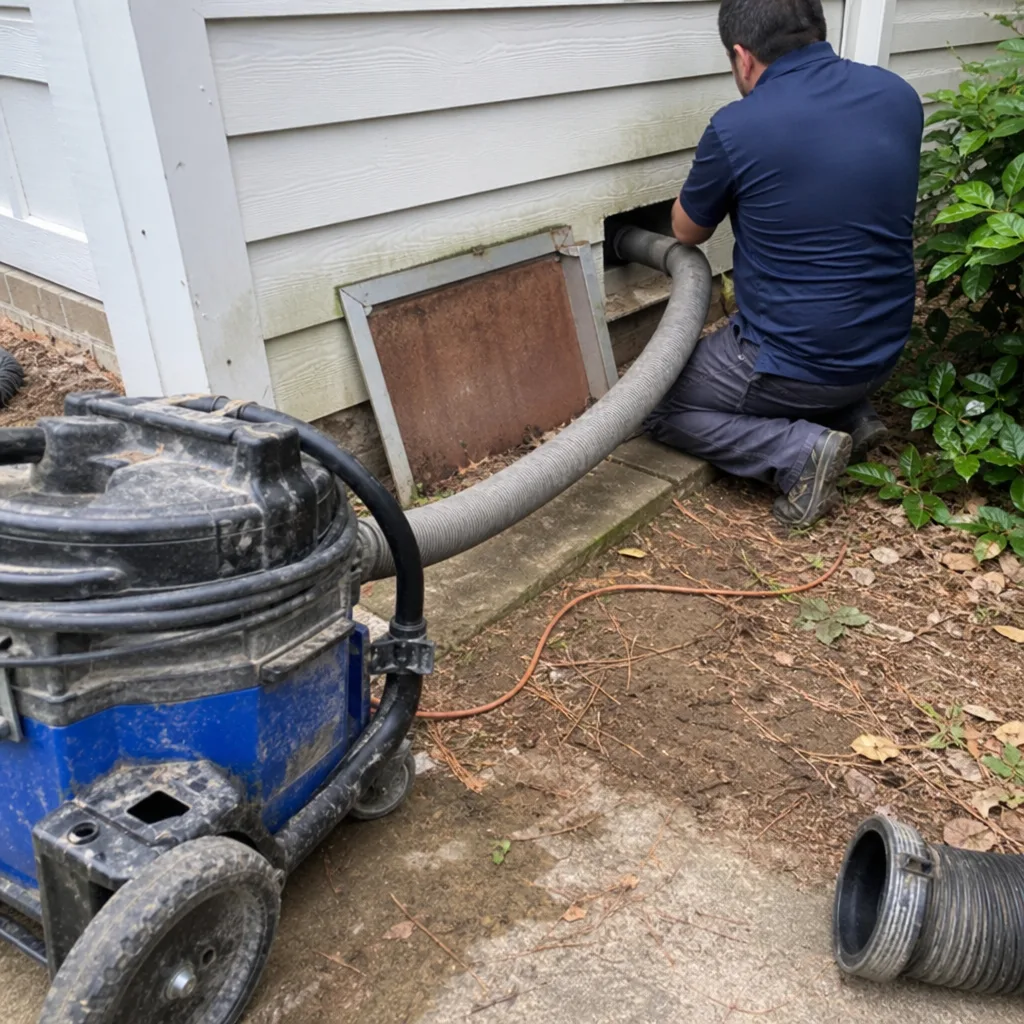 Before
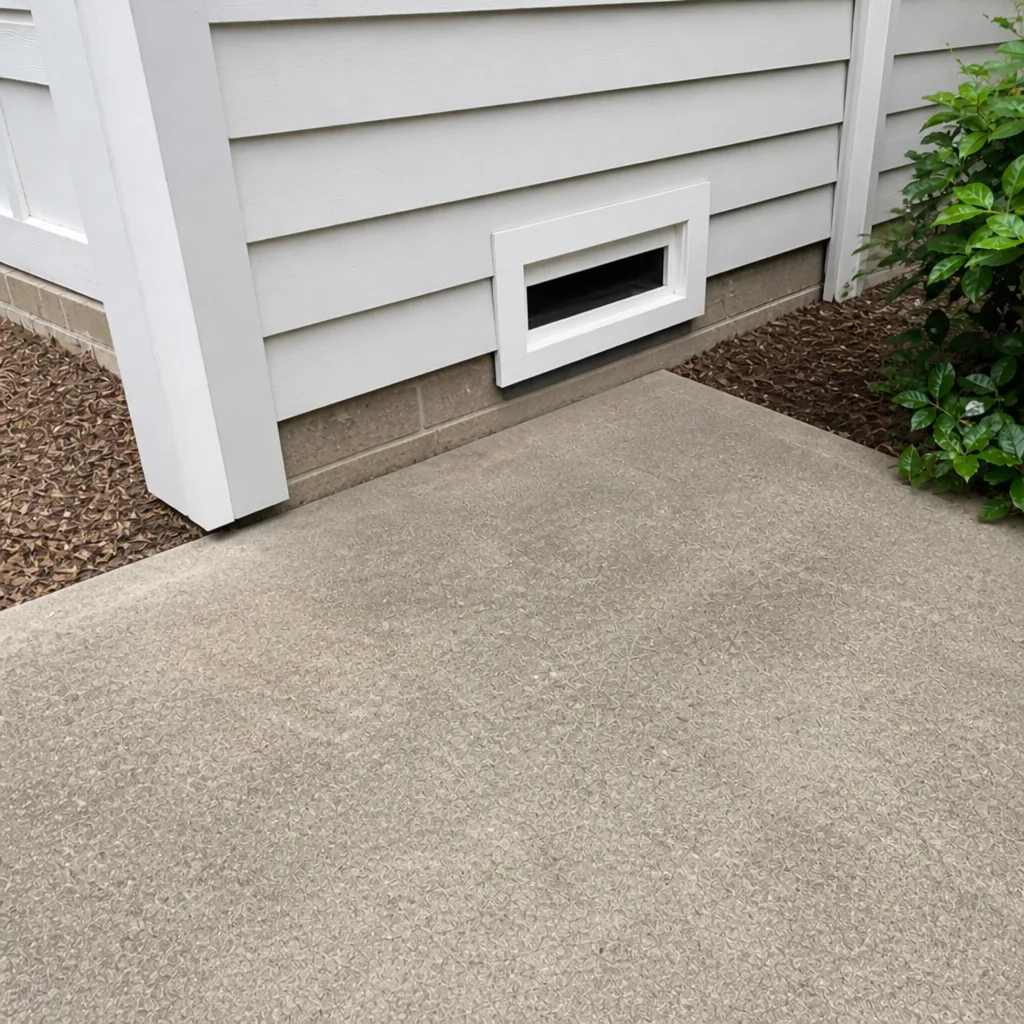 After
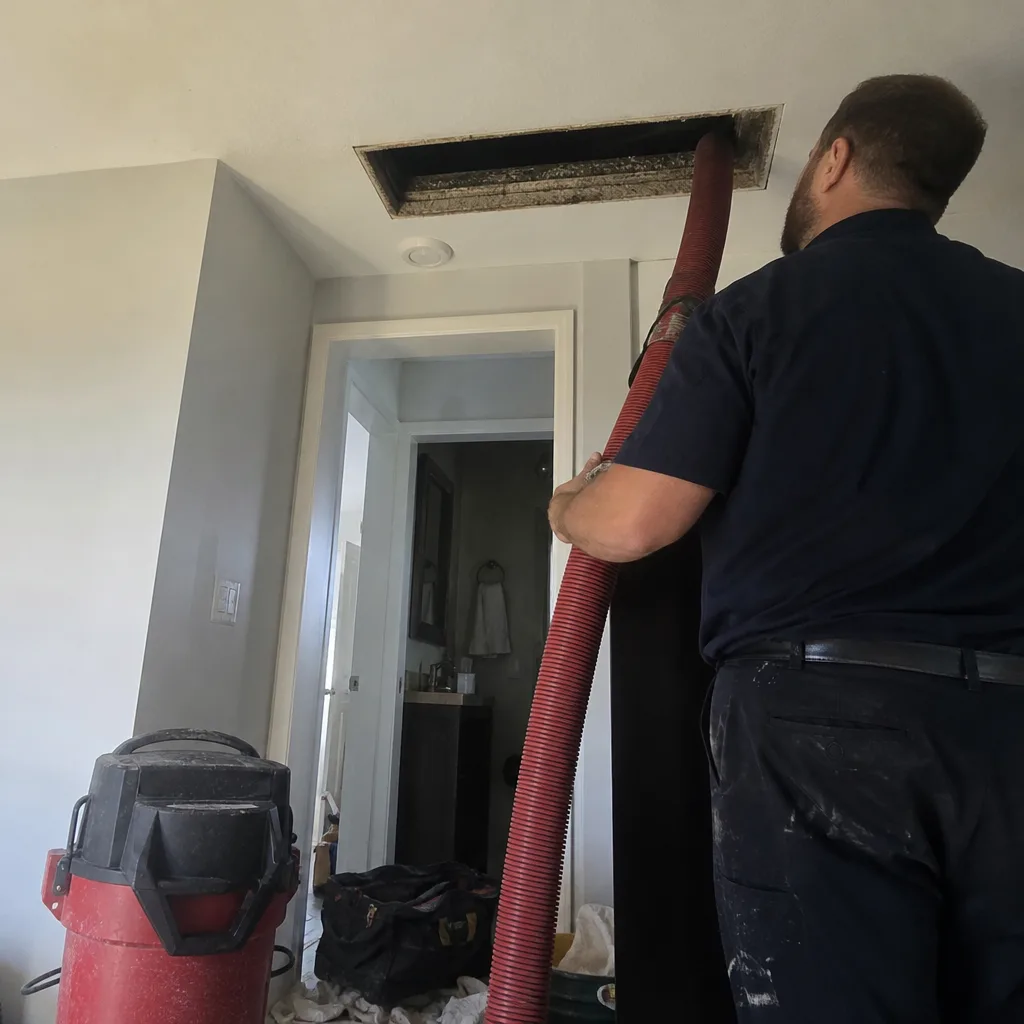 Before
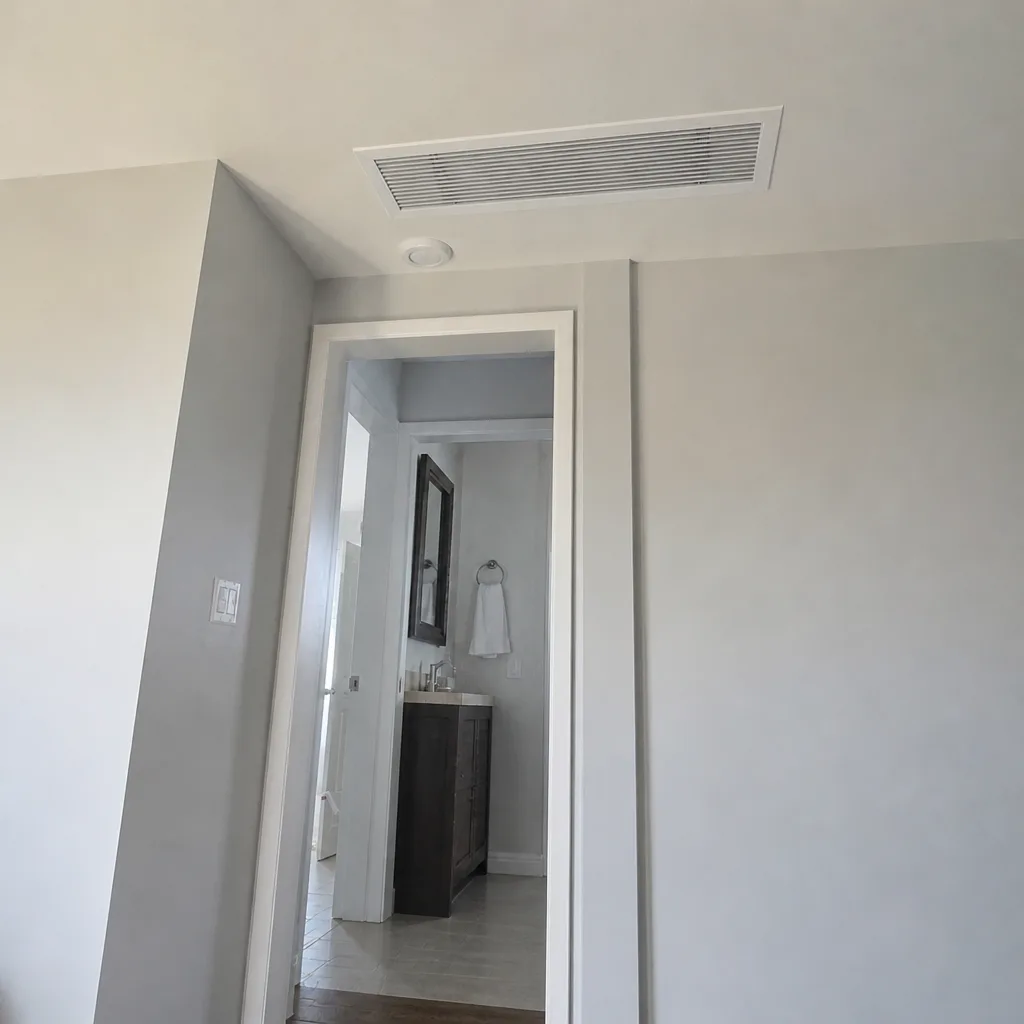 After
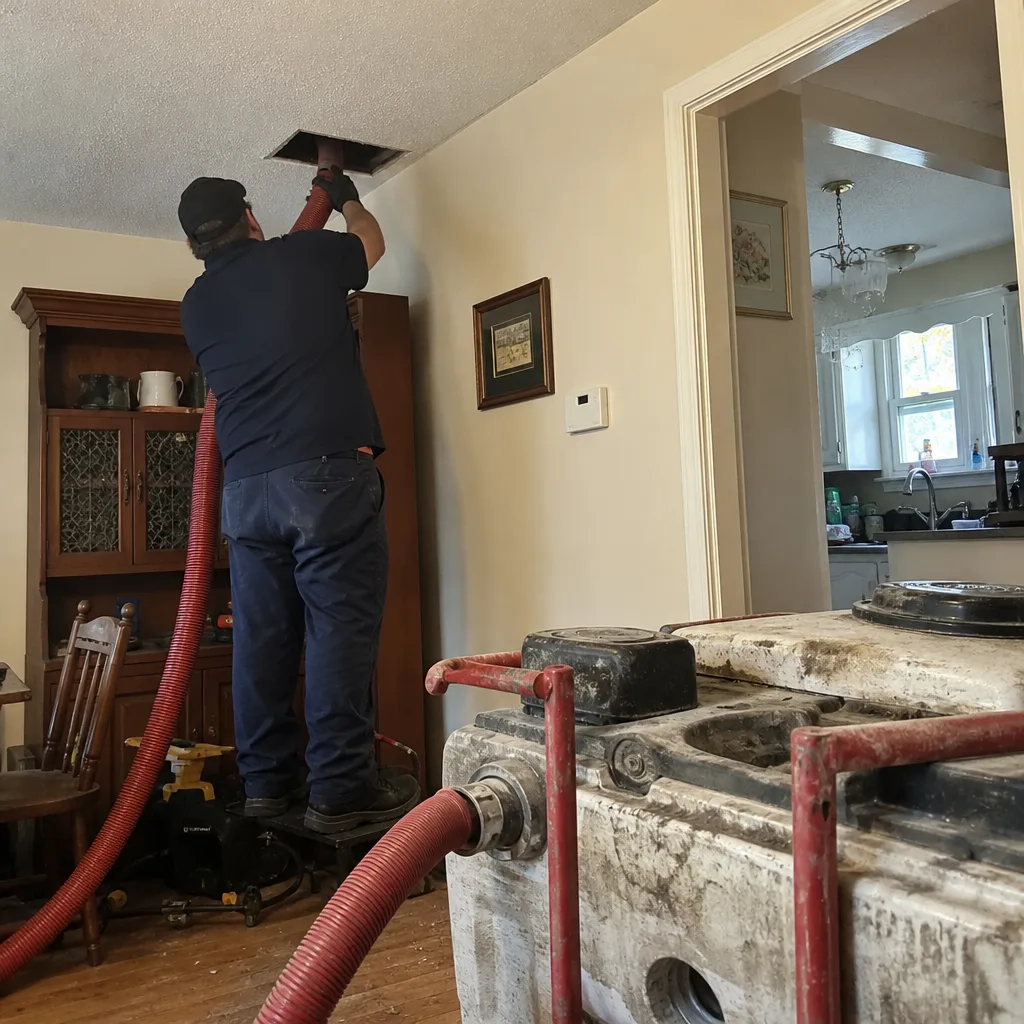 Before
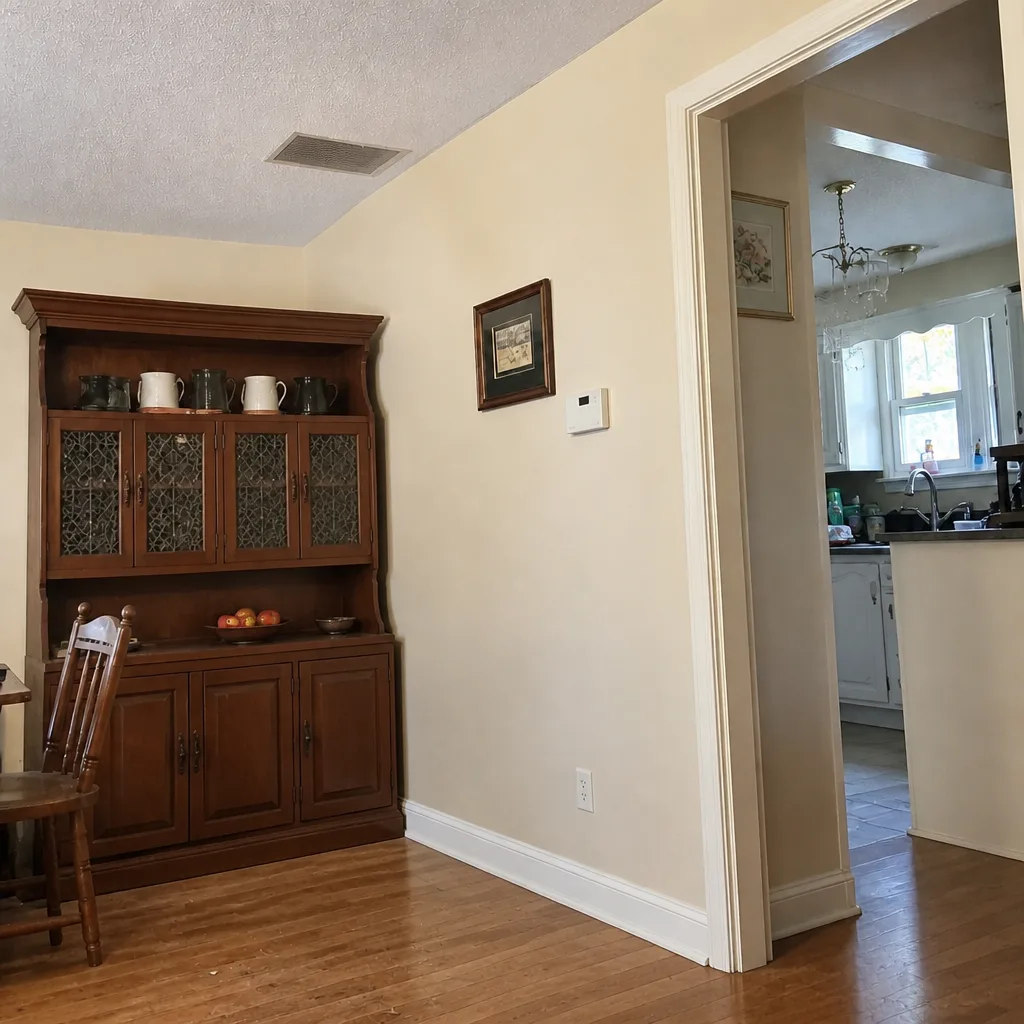 After
When to Call a Professional
Not every duct problem needs immediate professional attention. Some do. Call a professional for duct service in Five Points if: your dryer takes two cycles or overheats, you can see mold on a register or inside a duct opening, a room gets no airflow, you smell something musty that gets worse when the AC runs, or the ducts haven’t been inspected since you moved in. Most other signs – dust buildup, uneven airflow, allergy flare-ups indoors – are worth a scheduled inspection and a written recommendation. During the visit, our technicians use mechanical agitation with Rotobrush equipment and HEPA extraction with Nikro vacuums, and we fix leaks and disconnected runs on the same visit. Air Duct Cleaning Five Points offers free estimates in Five Points – call (877) 523-6180. We answer 24/7. Fast dispatch from 7am to 7pm, Sunday through Friday.
Frequently Asked Questions
Every three to five years for most Five Points homes, and sooner if you’ve had a renovation, a pest issue, visible mold, or a system with significant airflow complaints. Homes with pets, allergy sufferers in the household, or long-running humidity problems benefit from a tighter inspection interval. The right answer is set by what the inspection finds rather than the calendar alone. Call (877) 523-6180 for a free estimate.
Yes – dryer vent lint is a real and documented fire risk, and it’s the most serious duct emergency in any house. Lint is highly combustible, and a dryer produces enough heat to ignite it. Stop using the dryer if you see any of the common blockage signs and get the vent professionally cleaned. Call (877) 523-6180.
No. Cleaning removes debris from the duct pathway; repair rebuilds the pathway when it’s leaking, disconnected, or crushed. They’re separate services and often both needed on the same visit. At Air Duct Cleaning Five Points we perform cleaning, repair, and sealing in-house so a Five Points homeowner doesn’t need to book a second contractor. Call (877) 523-6180.
Cleaning removes the debris mold feeds on, and sanitizing treats what’s left, but mold regrows if the underlying moisture source isn’t fixed. A real fix addresses the moisture: seal leaking ducts, correct return sizing, or add whole-home humidity control. Visible mold in the airstream should be handled with professional containment. Call (877) 523-6180 for a free estimate.
A household shop vac can’t clean a duct system. It doesn’t reach past the first elbow, and it can’t capture what it disturbs, so debris gets pushed back into the house. The professional method – mechanical agitation plus HEPA extraction – is what actually removes the accumulation. Call (877) 523-6180.
In-house. Duct repair and sealing are part of our core service menu, so leaks, gaps, and disconnected runs found during cleaning are fixed on the same visit. That matters in Five Points where older homes often have sheet-metal runs that have never been resealed. Call (877) 523-6180.
The Bottom Line
Air duct emergencies in Five Points are almost always slow failures that leak, block, and recontaminate long before they become urgent. The useful preparation is not panic but knowing the system: mapping runs, labeling registers, logging service, and catching the musty smell before it becomes a mold problem. Two genuine emergencies are worth memorizing – a blocked dryer vent and visible mold in the airstream – and everything else is a scheduled inspection. When you do call, insist on the method that addresses the full pathway: mechanical agitation with Rotobrush, HEPA capture with Nikro, correction of leaks with in-house repair, and Aprilaire or Honeywell upgrades when the root cause is a house problem. Call (877) 523-6180 for a free estimate. We answer 24/7. Fast dispatch from 7am to 7pm, Sunday through Friday.
Written by the team at Air Duct Cleaning Five Points.