
Nikro Air Duct Cleaning in Five Points: A Homeowner’s Guide
When a duct cleaning company says they use “professional equipment,” that phrase covers everything from a Nikro HEPA-filtered vacuum pulling real suction through a sealed system to a modified shop vac with a logo slapped on the side. The difference in outcome is not subtle. If you’ve been comparing quotes in Five Points and can’t tell what’s actually under the hood of each one, this guide is for you. We’ll explain what Nikro equipment is, how it works, and what to watch for.
What does Nikro actually make, and why does it matter?
Nikro Industries manufactures professional-grade vacuum and filtration equipment used across the restoration, remediation, and duct cleaning trades. Their product line includes portable and truck-mounted vacuum units, HEPA filtration systems, and accessory tools like rotary brushes, skipper balls, and air whips. The reason it matters is simple: the equipment determines whether debris gets removed from your ductwork or just stirred up and redistributed through your Five Points home.
Consumer-grade vacuums and shop vacs are built for surface cleanup, not sustained negative-pressure work inside a sealed duct system. Here’s what separates professional-grade from consumer-grade in concrete terms:
- Airflow (CFM): Professional Nikro units are rated to move a high volume of air per minute through the duct system, which is what creates the negative pressure needed to pull debris toward the vacuum rather than into your living space.
- Filtration stages: Nikro HEPA systems use multi-stage filtration, with the final HEPA stage capturing fine particulates that would pass straight through a standard shop vac filter.
- Motor rating and duty cycle: Professional units are built to run continuously through a full job without overheating. A consumer vacuum is not.
That’s the technical side. The practical side is that when a contractor shows up with a Nikro system, you’re seeing equipment designed for the job rather than adapted to it.
How does a Nikro negative pressure system work during a cleaning?
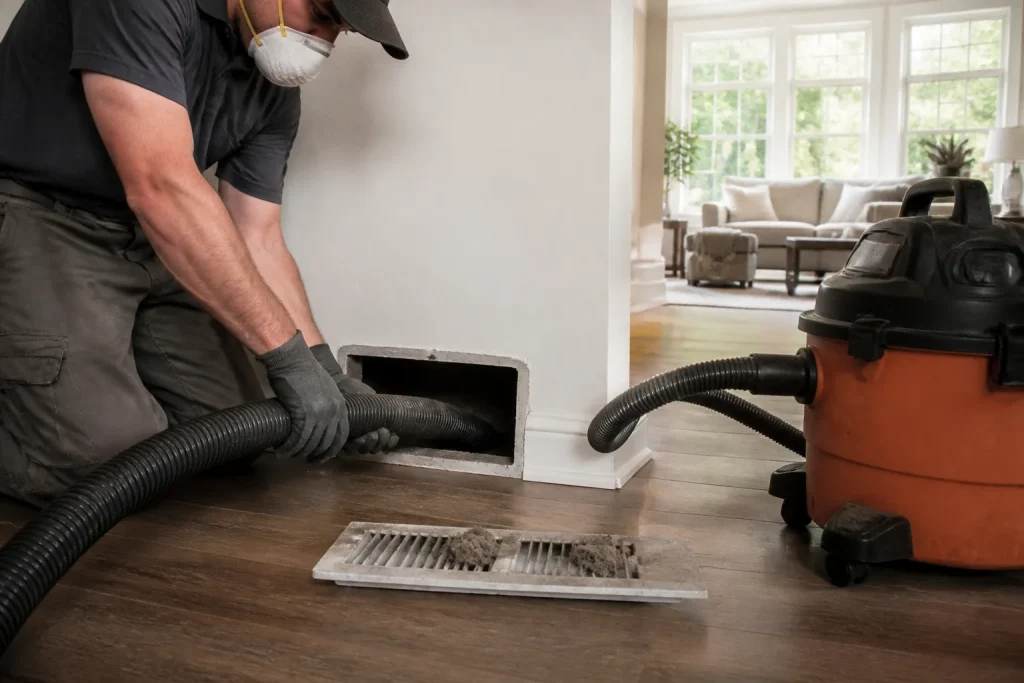
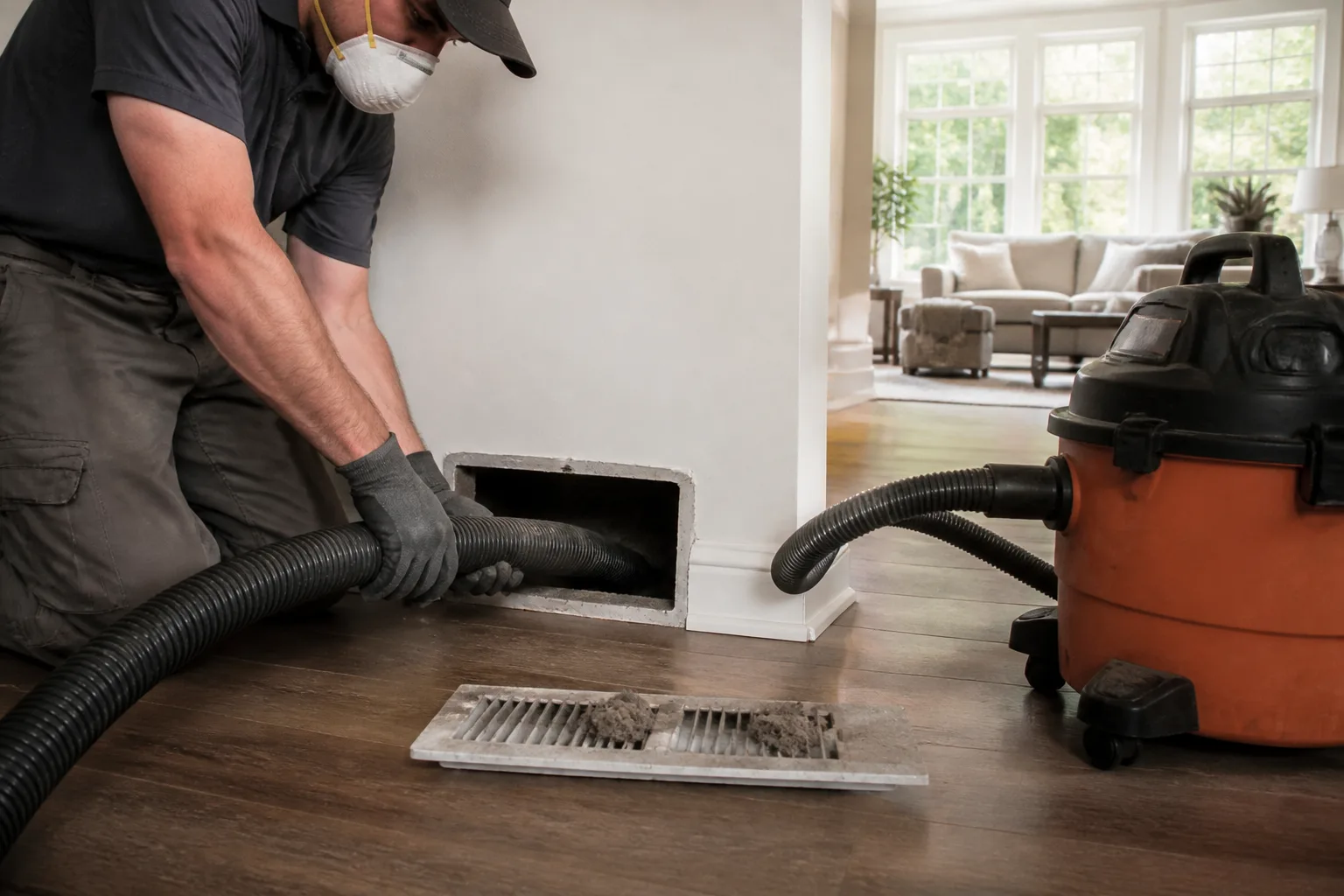
A Nikro vacuum connects to the duct system at a strategic point, usually the main trunk line or a large return register, and creates negative pressure throughout the ductwork. That pressure does two things at once: it loosens debris from duct walls and it keeps that debris moving toward the vacuum instead of escaping into your rooms.
Here’s the general sequence of how it works in practice:
- The vacuum unit is connected at one end of the duct system and sealed so pressure doesn’t leak out.
- The technician works from the opposite end, using agitation tools (more on those below) to dislodge debris from duct walls.
- The negative pressure captures the loosened material and pulls it through the HEPA filtration stages.
- The HEPA filter traps fine particles, which is what prevents cross-contamination in your home during the cleaning.
In our experience, containment is where cut-rate jobs fall apart. If the vacuum isn’t properly sealed or the filtration isn’t HEPA-rated, dust ends up settling on your furniture instead of in the filter. Companies using Abatement Technologies air filtration equipment add another layer of containment by maintaining true negative-air pressure in the work area, which is the same standard used in professional remediation. That’s not typical of residential duct cleaners in Five Points, and it’s one reason we pair Nikro extraction with that setup.
What are Nikro’s accessory tools, and why do different ducts need different ones?
No single tool cleans every duct. Nikro’s accessory line exists because duct systems have different geometries, and what works on a straight rectangular trunk line won’t touch the buildup in a flexible round run or a tight elbow. The main tools break down like this:
- Rotary brushes: Physically agitate duct walls to dislodge stuck-on debris. We use Rotobrush rotary-brush systems for this step, since mechanical agitation loosens material that suction alone leaves behind.
- Skipper balls: Air-driven balls that bounce through the duct, scouring walls as they travel. Useful in larger or irregular runs where a brush can’t reach every surface.
- Air whips: Forward-and-reverse compressed-air nozzles that blast debris loose from flexible duct and tight spaces.
The point is that a proper cleaning uses the right tool for each section of duct, not one gadget run through the whole system. A Five Points home with a mix of rigid trunk lines and flexible branch runs needs at least two of these tools to be done correctly. Mechanical agitation plus HEPA extraction is the method; the accessories are how it gets applied.
What should you actually see and hear when professional equipment is running?
You don’t need to be an equipment expert to tell whether a job is being done properly. Here’s what you should observe when a real professional system is running in your home:
- You hear steady suction: A continuous, low hum from the vacuum unit, not intermittent revving that suggests a small machine struggling.
- You see hoses connected to your ductwork: A proper setup connects to the system itself, not just to individual registers with a handheld tool.
- You don’t see dust clouds: If material is being properly captured, your air shouldn’t get visibly worse during the job.
- You see containment measures: Filters, seals, and work-area controls that keep debris from spreading.
And here’s the moment to pay attention: when the technician finishes, ask to see the filter or the collected material. A HEPA system that’s been running properly will show you what came out of your ducts. Before-and-after photos of your own system are a fair ask, and any contractor confident in their equipment should have no problem providing them. If a company in Five Points can’t show you what came out, that tells you something.
What Nikro equipment can and can’t do
Here’s where we want to be honest, because it’s a question we hear and a distinction that matters. Nikro equipment is a cleaning and extraction system. It removes debris, captures particulates, and establishes the containment that makes a proper duct cleaning possible. What it does not do is repair your ductwork.
If an inspection reveals leaks, gaps, disconnected sections, or failing seals, that’s a repair problem, not a cleaning problem. No vacuum fixes a disconnected duct run, and booking a second contractor to come back and handle it is a hassle most homeowners in Five Points would rather avoid. That’s why we handle duct repair and sealing in-house, so leaks found during cleaning get addressed on the same visit rather than referred out. Similarly, coil cleaning and HVAC component work require their own equipment and approach, which is part of why a full HVAC cleaning is often worth scheduling alongside duct work.
Clean ducts and a leaking system still waste energy and still affect your indoor air. The cleaning is the foundation; the repair and sealing is what makes it last.
Choosing a duct cleaning company in Five Points
Understanding the equipment helps you ask better questions. When you’re getting quotes in Five Points, the ones worth pursuing will be able to tell you what kind of vacuum they use, whether it’s HEPA-rated, and how they maintain negative pressure during the job. If the answer is vague, that’s your answer. Professional-grade equipment isn’t a marketing claim, it’s a specific thing you can ask about and verify.
If you’d rather not spend your afternoon comparing vacuum specs, call (877) 523-6180. The estimate is free, the price is set per job by a written estimate before any work starts, and we’ll show you before-and-after photos of your own system when we’re done.
Related services in Five Points: air duct cleaning, dryer vent cleaning, and Air Duct Cleaning Five Points for the full overview.
The Bottom Line
Nikro equipment is real professional gear, and knowing what it is and how it works helps you tell a genuine cleaning from a dressed-up shop vac. The key points to carry away:
- Nikro HEPA systems create the negative pressure and multi-stage filtration that keep debris out of your living space.
- Different duct geometries need different tools: rotary brushes, skipper balls, and air whips each handle what the others can’t.
- You can verify a proper job by watching for steady suction, sealed connections, containment, and before-and-after evidence.
- Cleaning equipment removes debris, but leaks and disconnected runs need repair and sealing to actually solve the problem.
If you’re in Five Points and need help, Air Duct Cleaning Five Points offers free estimates. Call (877) 523-6180. We answer 24/7. Fast dispatch from 7am to 7pm, Sunday through Friday.
Frequently Asked Questions
Yes. Asking what vacuum and filtration system a contractor uses is one of the fastest ways to separate professional-grade operators from cut-rate ones. A company that can name its equipment and explain its filtration stages is worth taking seriously. Call (877) 523-6180 for a free estimate.
When properly connected and sealed, yes. Professional Nikro units are designed to move high airflow through the full duct system, and the seal at the connection point is what maintains negative pressure throughout. The key is the setup, not just the machine. Call (877) 523-6180 to schedule an estimate.
Only if the company offers repair as part of its service. The cleaning equipment removes debris; repairing leaks, gaps, and disconnected sections requires a separate skill set and tools. We handle both in one visit, so issues found during cleaning get fixed on the same day. Call (877) 523-6180 to book.
A general guideline is every few years for most households, more often if you have pets, allergies, recent renovation dust, or visible buildup at the registers. There’s no single right answer for every home in Five Points, so a free inspection is the better starting point than a fixed schedule. Call (877) 523-6180 for an honest assessment.
Written by the team at Air Duct Cleaning Five Points.
Need Air Duct Cleaning Help?
Call Air Duct Cleaning Five Points - the local pro we connect you with is licensed and insured, with free written estimates in Five Points.
(877) 523-6180